
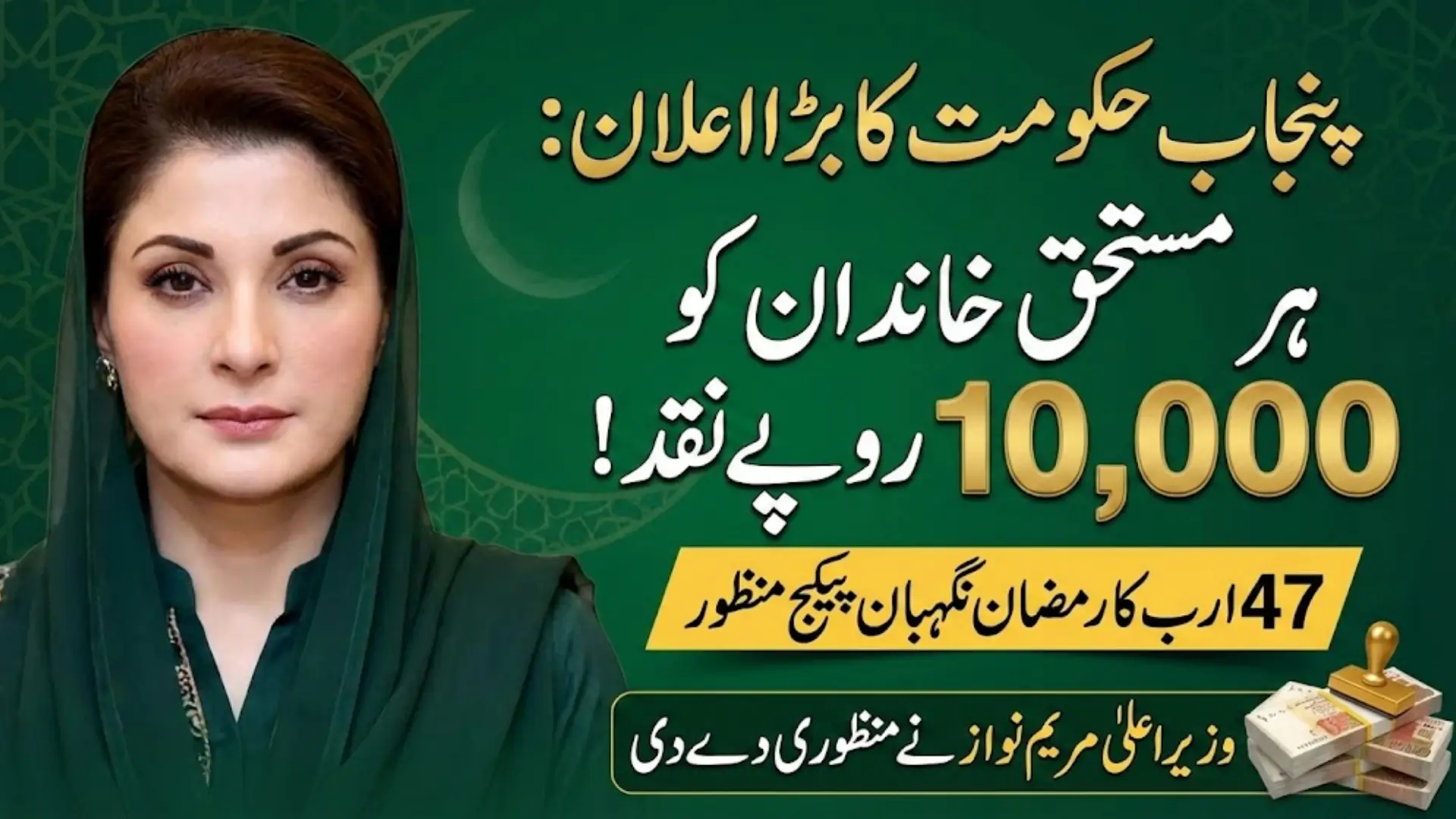
Ramadan Nighaban Package
Ramadan Nighaban Package Punjab government has announced a major relief initiative ahead of Ramadan after Chief Minister Maryam Nawaz approved the Rs 47 billion Ramadan Nighaban Package. This decision comes at a time when inflation, rising food prices, and daily household expenses have made Ramadan especially difficult for low-income families across Punjab. For many households, managing sehri and iftar has become a serious challenge, and this package aims to reduce that burden in a practical way.
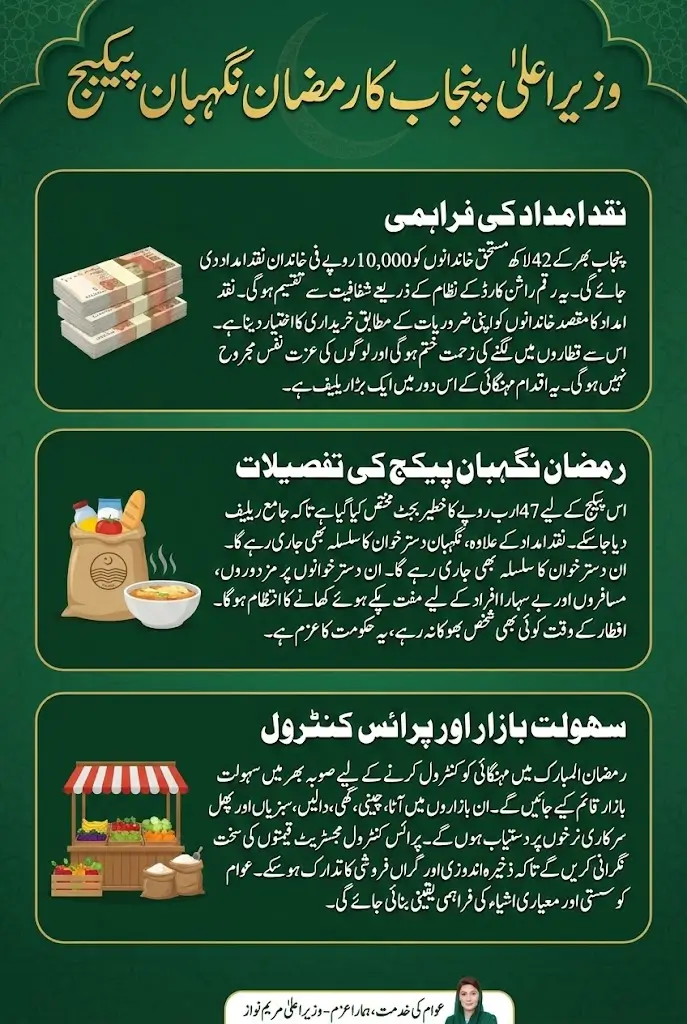
From what has been observed on the ground in previous years, relief programs often fail when they are either too small or poorly implemented. This time, the Punjab government has chosen a broader approach by combining direct cash support, ration assistance, and price control measures under one structured plan.
You Can Also Read: Parwaaz Card Registration Start: Know Required Documents
Background of the Ramadan Relief Initiative
Ramadan is a month of spiritual reflection, but for poor families it also becomes a period of financial stress. Food consumption increases, market prices rise, and daily wage earners often struggle to balance faith and finances. Keeping these realities in mind, the Punjab government designed the Ramadan Nighaban Package as a targeted welfare initiative rather than a symbolic gesture.
Instead of relying only on ration bags, the government has focused on cash assistance, allowing families to make their own choices according to their household needs. This approach respects dignity and avoids forcing people into a one-size-fits-all solution.
You Can Also Read: Lesco Bill Check By 14 Digit Reference Number
Key reasons behind launching this Ramadan package include:
- Continuous rise in prices of essential food items
- Increased household expenses during Ramadan
- Financial pressure on daily wage earners
- Need for transparent and direct relief delivery
High-Level Approval by Punjab’s Chief Minister
The final approval of the Ramadan Nighaban Package was granted during a high-level meeting chaired by Chief Minister Maryam Nawaz. The meeting focused entirely on Ramadan planning, welfare coverage, and ensuring that assistance reaches deserving families on time.
By approving a budget of Rs 47 billion, the Chief Minister made it clear that the government is willing to allocate serious resources to public welfare. Officials were directed to prioritize transparency, speed, and coordination between departments so that delays and confusion can be avoided during Ramadan.
Key Decisions Taken During the Ramadan Planning Meeting
Several important decisions were finalized during the meeting, covering financial aid, food availability, and price control mechanisms. Instead of launching scattered schemes, the government decided to combine all Ramadan-related relief under one umbrella to improve efficiency.
This integrated approach helps citizens understand the program easily and reduces administrative hurdles that often discourage deserving families from accessing relief.
You Can Also Read: PM E Fan Replacement Program 2026 Online Registration
Major decisions approved in the meeting included:
- Increase in Ramadan cash assistance for ration card holders
- Financial support for millions of deserving families
- Continuation of Nighaban Dastarkhwan for cooked meals
- Establishment of Sahulat Bazaars for affordable essentials
Increased Financial Support for Ration Card Holders
One of the most impactful decisions was increasing Ramadan assistance for ration card holders from Rs 3,000 to Rs 10,000. In current market conditions, Rs 3,000 was not enough to support even a small family for a few days. The revised amount reflects the real cost of living faced by poor households.
This increase allows families to manage essential items such as flour, rice, cooking oil, pulses, fruits, and vegetables without borrowing money or relying on charity. It also gives families control over how they spend the assistance.
The increased amount helps in:
- Improving food security during Ramadan
- Reducing dependence on loans and informal help
- Allowing families to prioritize their most urgent needs
You Can Also Read: AIOU Enrollment 2026 Admission, Result
Cash Assistance for 4.2 Million Deserving Families
Under the Ramadan Nighaban Package, 4.2 million deserving families across Punjab will receive Rs 10,000 each. This large-scale cash transfer shows that the government is targeting widespread relief rather than limited support for selected areas.
From previous experiences, direct cash assistance has proven to be more effective than ration distribution because it reduces delays and gives families flexibility. If implemented properly, this support can help families manage not only food expenses but also electricity bills and other basic needs during Ramadan.
You Can Also Read: Apni Chhat Apna Ghar Program Online Registration
Overview of the Ramadan Nighaban Package
| Feature | Details |
|---|---|
| Total Budget | Rs 47 Billion |
| Beneficiary Families | 4.2 Million |
| Assistance per Family | Rs 10,000 |
| Coverage | All districts of Punjab |
Role of CM Ration Card in the Ramadan Package
The CM Ration Card system is being used as a key tool to identify eligible families for this Ramadan relief. This system helps ensure that assistance reaches those who genuinely need it and reduces the risk of misuse.
By relying on existing data, the government can distribute funds more efficiently and avoid unnecessary verification delays. Families already registered under ration programs are expected to receive assistance smoothly during Ramadan.
Benefits of using the ration card system include:
- Transparent identification of beneficiaries
- Faster and more organized fund distribution
- Reduced chances of duplication or corruption
You Can Also Read: Pound Rate Today In PKR Full Details
Support Through Nighaban Dastarkhwan
Alongside cash assistance, the government has approved the continuation of Nighaban Dastarkhwan during Ramadan. These dastarkhwans provide free cooked meals, especially for laborers, travelers, and people without stable incomes.
In many urban areas, such initiatives become a lifeline for individuals who fast all day without knowing where they will get food at iftar. The approval of this program highlights the government’s focus on compassion and inclusion.
The dastarkhwan initiative aims to:
- Provide free meals during iftar hours
- Support daily wage earners and the homeless
- Ensure no one goes hungry during Ramadan
You Can Also Read: WhatsApp Introduces Group Chat History Sharing
Sahulat Bazaar and Affordable Essentials During Ramadan
Price hikes during Ramadan are a common problem in Pakistan, and they hit poor families the hardest. To control this issue, the Punjab government has approved Sahulat Bazaars across the province as part of the Ramadan plan.
These bazaars will offer essential items at subsidized rates under government supervision. Based on past observations, Sahulat Bazaars help stabilize prices and reduce exploitation by middlemen, especially during peak demand.
Government’s Commitment to Social Protection
During the meeting, Chief Minister Maryam Nawaz emphasized that no deserving family should feel alone during Ramadan. This statement reflects a broader commitment to social protection rather than temporary relief.
By combining financial assistance, food programs, and market control measures, the government is attempting to address both short-term hardship and long-standing economic pressure faced by low-income communities.
Expected Impact on Low-Income Communities in Punjab
If implemented effectively, the Ramadan Nighaban Package can bring real relief to millions of families across Punjab. The increased cash assistance, access to affordable food, and availability of free meals can reduce financial stress during Ramadan.
For ordinary citizens, this initiative is more than just a welfare scheme. It is a sign that the government recognizes their struggles and is willing to stand with them during one of the most important months of the year.
You Can Also Read: Parwaaz Card Portal For Online Registration Opening