
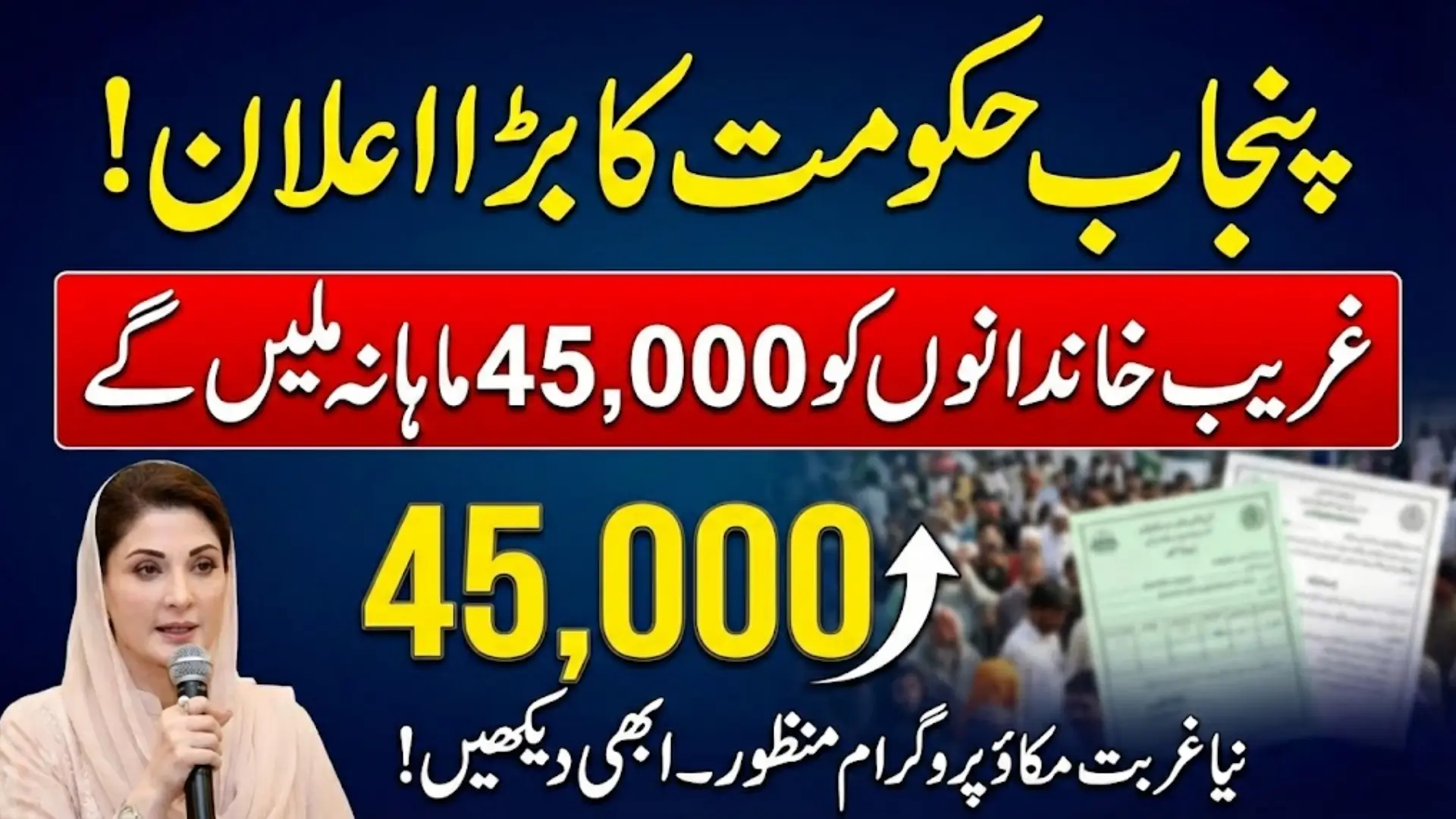
Punjabs New Poverty Relief Program
Punjabs New Poverty Relief Program Punjab government has recently been focusing heavily on welfare and financial support programs for poor and deserving citizens. While many welfare schemes already exist, discussions about stronger financial protection systems are increasing due to rising inflation and cost of living. Across Punjab, many families are struggling to manage basic needs like food, electricity bills, and medical expenses. Because of this, public expectations from government welfare programs are also increasing.
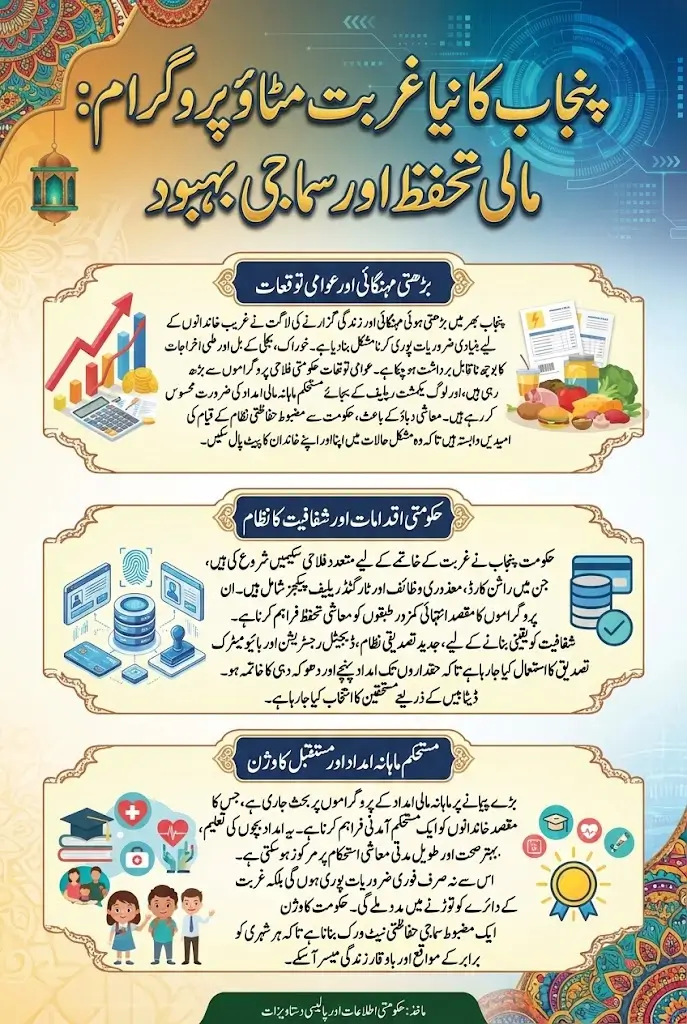
Recent welfare initiatives show that the government is trying to expand social protection step by step. For example, different support programs like ration cards, disability stipends, and targeted relief packages are already being implemented to help vulnerable groups. These programs aim to make sure poor families can survive difficult economic conditions and maintain basic living standards.
Many welfare initiatives in Punjab are linked with proper verification systems and digital registration to ensure transparency. In most schemes, beneficiaries are selected through databases, surveys, or social protection systems. This approach helps reduce fraud and ensures that assistance reaches the right people instead of being misused.
You Can Also Read: Ramadan Nighaban Package 2026 in Punjab: How to Register
Key Welfare Focus Areas in Punjab
- Financial assistance for low-income families
- Food subsidy programs through ration cards
- Special stipends for disabled and vulnerable groups
- Registration through verified social welfare systems
- Digital distribution of financial support
Why Large Financial Assistance Programs Are Being Discussed
Inflation has affected almost every sector in Pakistan. From grocery items to fuel and utility bills, prices have increased rapidly. For low-income families, managing monthly household expenses has become extremely difficult. In many rural and semi-urban areas, families depend on daily wages, agriculture, or small businesses. If income stops even for a few days, the whole household suffers.
Government officials and policy planners are now focusing more on long-term financial stability programs rather than one-time relief. The idea behind larger monthly assistance discussions is to provide stable income so families can plan their expenses better. Monthly support is considered more effective because it helps families manage continuous expenses instead of temporary relief.
Recent relief packages show how governments are setting income limits to target the most deserving people. For example, in some relief programs, eligibility is linked with income thresholds to make sure support reaches the poorest segments of society.
Main Reasons Behind Expanding Financial Assistance
- Increasing inflation pressure on low-income households
- Need for stable monthly income instead of one-time relief
- Rising unemployment and limited job opportunities
- High cost of electricity, gas, and basic groceries
- Need to reduce poverty levels in rural Punjab
You Can Also Read: Apna Khait Apna Rozgaar Program For Farmers
Expected Structure of Large Monthly Assistance Programs
Although any new high-value monthly assistance program requires official approval and procedure, previous Punjab welfare models give an idea of how such programs usually work. Most schemes are implemented through social protection authorities and verified databases like PSER or similar systems.
Usually, applicants must prove they belong to low-income or deserving categories. Government departments verify family income, assets, and social status before approval. In some cases, biometric verification is also used to prevent fake registrations and duplicate benefits.
Another important factor is digital payments. Many modern welfare programs now use bank accounts, smart cards, or digital wallets. This reduces corruption and ensures funds reach beneficiaries safely.
Expected Features in Large Welfare Assistance Models
- CNIC-based registration system
- Income and poverty score verification
- Biometric confirmation
- Digital payment transfer
- Monitoring through government databases
You Can Also Read: Apni Zameen Apna Ghr For Free 3 Marla Plot With 15 Lakh
How High Monthly Support Can Change Lives of Poor Families
If large monthly financial assistance programs are introduced, they can significantly improve living standards of poor families. Regular income support helps families focus on education, health, and long-term stability instead of daily survival.
In many villages and small towns, families struggle to send children to school due to financial issues. Monthly support can help parents continue children’s education without forcing them into labor. It can also help families afford proper medical treatment and better nutrition.
For widows, elderly people, and disabled citizens, regular financial support can provide dignity and independence. Welfare programs are not only about money but also about social security and protection.
Positive Social Impact of Monthly Financial Assistance
- Reduction in child labor cases
- Better school attendance among children
- Improved healthcare access
- Better nutrition and food security
- Lower financial stress in households
You Can Also Read: Safe City New E-Challan SMS System Announced
Overview of Welfare Financial Support Models in Punjab
| Program Type | Example Support | Main Purpose |
|---|---|---|
| Food Subsidy Programs | Monthly ration or subsidy support | Help families buy food items |
| Cash Assistance Schemes | Monthly or quarterly cash payments | Support daily household expenses |
| Special Category Stipends | Support for disabled or minority groups | Social protection and inclusion |
| Youth Financial Programs | Interest-free loans or skill programs | Employment and income generation |
What Citizens Should Keep in Mind About New Welfare Announcements
Whenever a new financial assistance program is discussed, fake messages and scams also start spreading. Many people receive fake SMS messages asking for money or registration fees. Citizens should always wait for official government announcements and avoid sharing personal data with unknown sources.
Government welfare programs are usually free to apply for. Registration is normally done through official websites, union councils, or government offices. If any agent asks for money, it is most likely a scam.
Important Safety Points for Public
- Never pay money for welfare scheme registration
- Trust only official government announcements
- Do not share CNIC details on unknown websites
- Confirm scheme details through official helplines
- Avoid middlemen or unauthorized agents
You Can Also Read: Preparations Have Been Made to Change School
Long-Term Vision of Punjab Welfare Expansion
Punjab government is gradually expanding social welfare coverage through different targeted programs. Instead of one single mega scheme, the government often introduces multiple smaller schemes targeting specific groups like farmers, youth, minorities, or low-income families.
This strategy helps cover more people in different categories. Over time, these welfare systems create a strong social safety net. If new high-value monthly assistance programs are introduced in the future, they may become part of this broader welfare structure.
The overall goal is to reduce poverty, improve economic stability, and provide equal opportunities for citizens. Welfare expansion is also important for economic growth because financially stable families contribute more positively to society and the economy.
You Can Also Read: Punjab Chief Minister Approves Rs 47 Billion Ramadan Nighaban
Final Analysis
Discussions about stronger financial support systems reflect the ground reality of economic pressure on common citizens. While official procedures for any new large monthly assistance program are always required, Punjab’s welfare direction clearly shows focus on helping poor and deserving families.
Existing welfare schemes already support different vulnerable groups through cash assistance, food subsidies, and social protection initiatives. Future programs may continue to expand financial coverage, especially if inflation and economic challenges continue