
PAVE Scheme Electric Bikes
PAVE Scheme Electric Bikes Pakistan has officially begun a major transition toward electric mobility with the start of subsidy transfers under the Pakistan Accelerated Vehicle Electrification (PAVE) Scheme. This development is especially important for ordinary citizens who rely on bikes and rickshaws for daily travel or earning a livelihood. After years of announcements and policies, the scheme has now entered its practical phase, with verified applicants already receiving subsidy amounts in their bank accounts.
From what can be seen on the ground, this initiative is not limited to paperwork or policy documents. Electric bikes and rickshaws are gradually appearing on roads, and people are seriously discussing alternatives to petrol and diesel vehicles. With fuel prices remaining unpredictable, the PAVE Scheme offers financial relief and a long-term solution for affordable transportation in Pakistan.
You Can Also Read: BISP 8171 Result Check By CNIC For 13500 Payment
Pakistan’s Journey Toward Electric Transportation
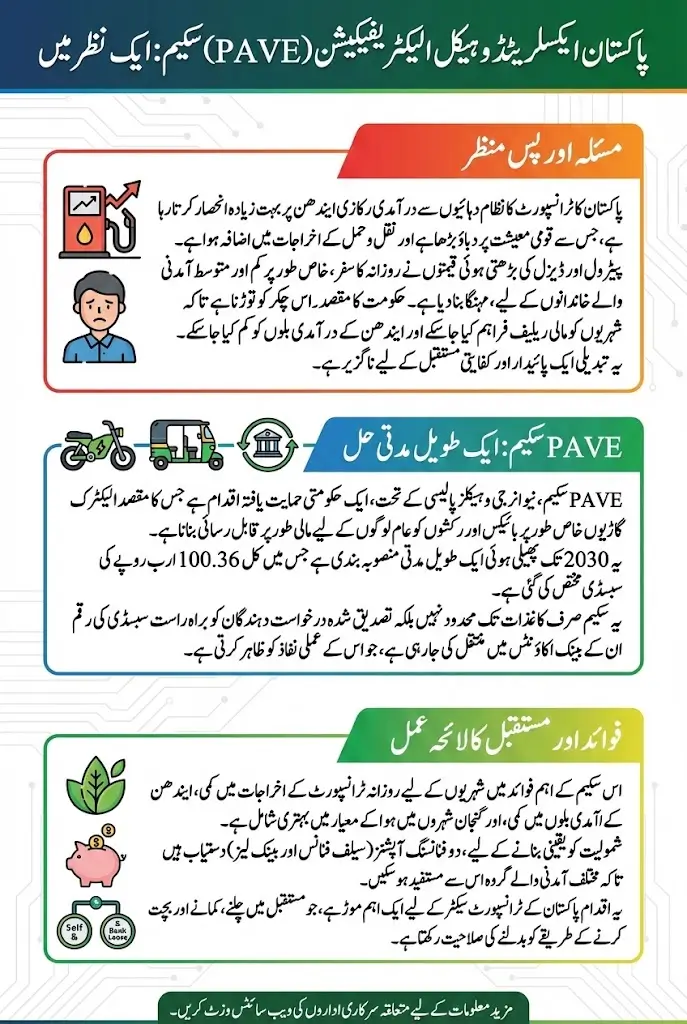
For decades, Pakistan’s transport system has depended heavily on imported fossil fuels. This dependence has increased transportation costs and placed pressure on the national economy. Rising petrol and diesel prices have made daily commuting expensive, particularly for low- and middle-income families.
The government’s push toward electric vehicles is aimed at breaking this cycle. Electric bikes and rickshaws consume less energy, cost less to operate, and are better for the environment. The PAVE Scheme is designed to make this transition practical rather than theoretical by providing direct financial support to citizens.
Key reasons behind this shift include:
- Reducing fuel import bills
- Lowering daily transport expenses for citizens
- Improving air quality in congested cities
- Encouraging modern and energy-efficient transport solutions
You Can Also Read: Shab E Barat 2026 Date In Pakistan – Night of Mid Shaban
What Is the PAVE Scheme and Why It Matters
The Pakistan Accelerated Vehicle Electrification (PAVE) Scheme is a government-backed initiative introduced under the New Energy Vehicles Policy (NEVP) 2025–2030. Its main objective is to accelerate the adoption of electric vehicles across the country by making them financially accessible to the public.
Unlike earlier policies that focused mainly on cars, this scheme prioritizes electric bikes and rickshaws because they are widely used by the general population. From students and office workers to delivery riders and rickshaw drivers, these vehicles form the backbone of daily mobility in Pakistan.
The scheme covers:
- Electric bikes
- Electric rickshaws
- Electric loaders
- Other electric vehicles in later phases
You Can Also Read: Silver Rate Today In Pakistan – 1 Tola Chandi
Long-Term Subsidy Plan and Government Commitment
One of the strongest aspects of the PAVE Scheme is its long-term planning. The government has committed a total subsidy of Rs. 100.36 billion over five years, extending until 2030. This shows that the electric vehicle initiative is not a short-term experiment but a sustained national program.
This funding will be distributed across multiple vehicle categories and phases, ensuring gradual but steady growth of electric mobility in Pakistan. The focus remains on transparency, verification, and fair distribution of subsidies.
PAVE Scheme Subsidy Overview
| Category | Details |
|---|---|
| Total Subsidy Budget | Rs. 100.36 Billion |
| Duration | Up to 2030 |
| Phase-I Coverage | 41,000 Electric Vehicles |
| Electric Bikes in Phase-I | 40,000 |
| Rickshaws & Loaders | 1,000 Units |
| Phase-II Vehicles | 78,170 |
| Phase-II Subsidy | Rs. 8.95 Billion |
You Can Also Read: Xiaomi 18 Hardware Features Surface in New Leak
Phase-I Implementation on the Ground
Phase-I of the scheme is currently being implemented under the supervision of the Engineering Development Board (EDB), which operates under the Ministry of Industries and Production. This phase focuses on distributing subsidies for 40,000 electric bikes and 1,000 electric rickshaws and loaders nationwide.
From a journalist’s perspective, Phase-I is crucial because it tests the entire system, including application processing, verification, coordination between departments, and actual subsidy transfers. The successful completion of this phase will determine how smoothly future expansions are carried out.
The government has already confirmed that subsidy disbursement has started for verified applicants, marking a major milestone in the scheme’s execution.
You Can Also Read: Benazir Kafalat New Qist: New vs Old Beneficiaries
Phase-II Expansion and Increased Coverage
Building on Phase-I, the government plans to expand the scheme under Phase-II during 2025–26. This phase aims to facilitate an additional 78,170 electric vehicles with a total subsidy allocation of Rs. 8.95 billion.
Phase-II is expected to reach a broader segment of the population, especially in densely populated urban areas where fuel-based transport costs are highest. With lessons learned from Phase-I, the government intends to improve efficiency and speed in subsidy processing.
You Can Also Read: IESCO Online Bill Check by 14-Digit Reference Number
Financing Options Available for Applicants
To ensure inclusivity, the PAVE Scheme offers two financing options so that people from different income groups can participate. These options are designed to reduce the financial burden on buyers and make electric vehicles accessible beyond elite circles.
Applicants can choose between:
- Self Finance Scheme
- Bank Lease Scheme
Each option serves a different financial need and lifestyle.
You Can Also Read: 9999 Ramzan Relief Scheme 2026 Step-by-Step
Self Finance Scheme Explained in Detail
Under the Self Finance Scheme, applicants purchase the electric bike or rickshaw by paying the full amount directly to the manufacturer. After completing the purchase and verification process, a subsidy of up to Rs. 80,000 is reimbursed directly into the applicant’s bank account by the State Bank of Pakistan.
This model is suitable for individuals who have savings and prefer a one-time payment rather than monthly installments. The reimbursement process ensures transparency, as subsidies are released only after thorough scrutiny.
Main features include:
- Full upfront payment
- Direct subsidy transfer
- Bank account verification
- Government-backed reimbursement
You Can Also Read: Ramzan Relief Package 2026 for Poor and Deserving
Bank Lease Scheme for Installment Buyers
The Bank Lease Scheme is particularly important for middle- and lower-income citizens. Under this option, electric bikes and rickshaws are provided on easy monthly installments through participating banks. Government subsidies reduce the overall cost, making installments affordable.
This scheme is widely seen as a practical solution for students, delivery riders, and rickshaw drivers who cannot afford full upfront payment but still want to switch to electric vehicles.
Subsidy Disbursement and Verification Process
The subsidy disbursement process has officially entered the operational stage. Verified applicants under both financing schemes have already started receiving subsidy amounts. The government has adopted a step-by-step verification framework to ensure transparency and accountability.
Before subsidy release, the following checks are carried out:
- Applicant identity verification through NADRA
- Vehicle purchase confirmation
- Registration with federal or provincial authorities
- Bank account authentication
Further disbursements will continue in phases as more applications are verified.
Role of Government Institutions and Partners
The successful execution of the PAVE Scheme depends on coordination among multiple institutions. Each organization plays a specific role in ensuring smooth implementation and accountability.
Key stakeholders include:
- Engineering Development Board (EDB)
- Ministry of Industries and Production
- State Bank of Pakistan
- Punjab Information Technology Board
- NADRA
- Participating banks
- Approved electric vehicle manufacturers
This collaborative approach strengthens trust in the system.
You Can Also Read: Green Tractor Scheme 2026 Apply Online Date Extended
Eligibility and Registration Requirements
Eligibility for the subsidy is subject to mandatory registration of electric vehicles with federal or provincial authorities. Without proper registration, subsidy claims are not processed.
Applicants must generally fulfill these requirements:
- Valid CNIC
- Active bank account
- Purchase from approved OEMs
- Official vehicle registration
These conditions help ensure that subsidies reach genuine buyers.
Economic and Environmental Benefits for Pakistan
The PAVE Scheme is expected to reduce Pakistan’s fuel import bill while promoting cleaner cities. Electric vehicles produce no direct emissions, which can significantly improve air quality in urban centers.
At the same time, local manufacturing of electric vehicles is expected to generate employment and encourage technological growth within the country.
Who Will Benefit the Most
The scheme primarily benefits those who rely on two- and three-wheelers for daily use or income generation. For many, electric vehicles can reduce monthly fuel expenses and maintenance costs.
Major beneficiaries include:
- Daily commuters
- Students
- Rickshaw drivers
- Delivery workers
- Small business owners
You Can Also Read: E Taxi Scheme Online Apply 2026 For Next Phase
Future Outlook of Electric Vehicles in Pakistan
The start of subsidy transfers under the PAVE Scheme marks a turning point for Pakistan’s transport sector. As awareness grows and infrastructure improves, electric bikes and rickshaws are expected to become a common sight on roads across the country.
With consistent government support, the PAVE Scheme has the potential to reshape how Pakistan moves, earns, and saves in the years ahead.