
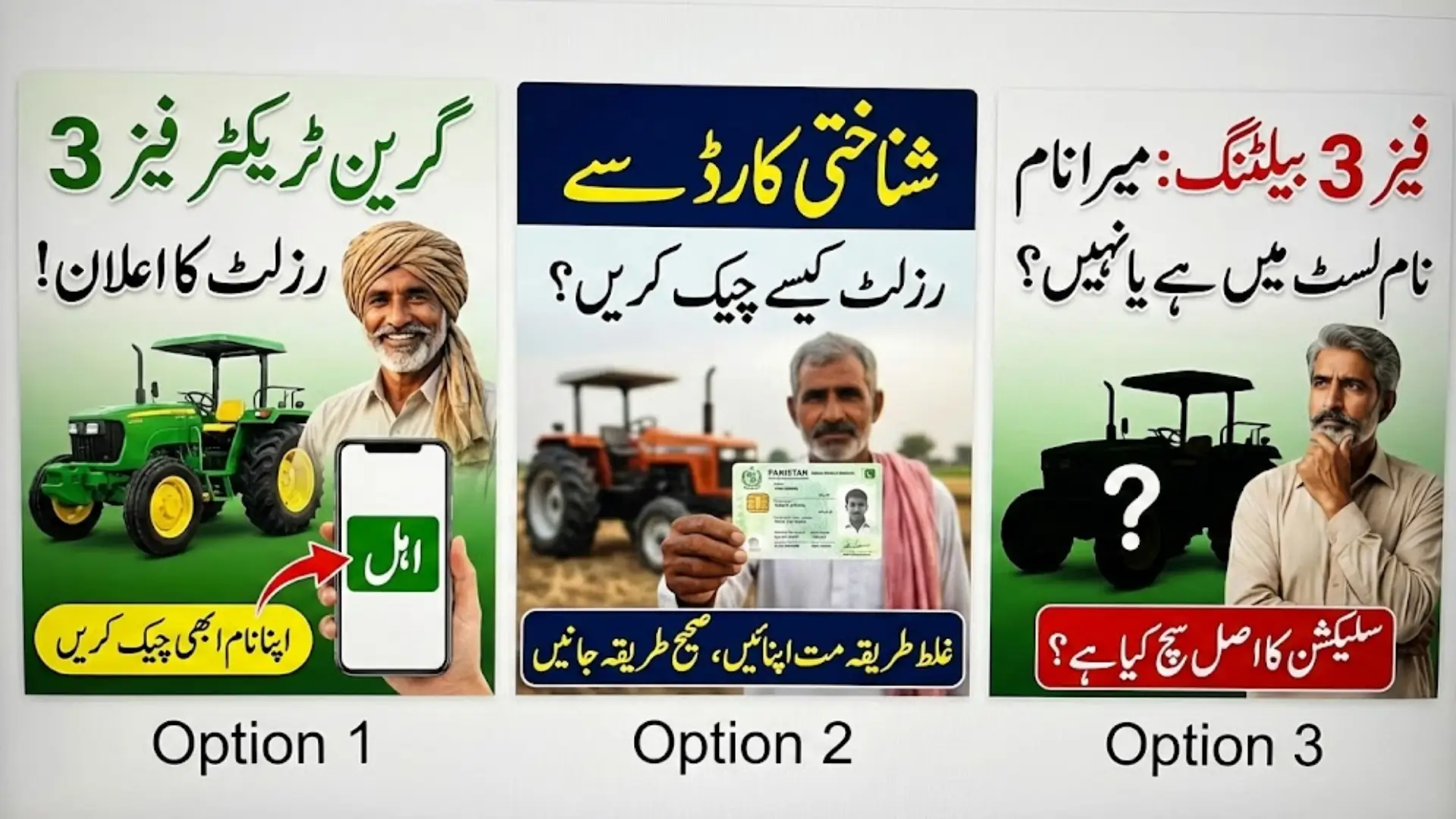
Green Tractor Phase 3 Balloting Result
The Green Tractor Phase 3 Balloting Result by CNIC has become one of the most discussed topics among farmers across Punjab in 2026. From small villages to tehsil headquarters, farmers are asking the same question: has my name appeared in the balloting or not? This concern is understandable because owning a tractor today is directly linked with timely cultivation, reduced labor dependency, and better crop output.

As someone who has closely observed government agriculture schemes over the years, one thing is clear: whenever information is unclear, confusion spreads faster than facts. That is why this article explains the complete Phase 3 result process in simple words, without technical language, so that every farmer can clearly understand how to check the result, what it means, and what to do next.
You Can Also Read: Vivo Y500i Launch Details
Why Phase 3 Balloting Is Crucial for Farmers in 2026
Phase 3 is not just another round of balloting; it is a second chance for thousands of farmers who applied earlier but could not succeed due to limited slots. Many of these farmers fulfilled all requirements but were left out simply because demand was higher than supply. The Punjab government decided to move forward with Phase 3 to bring more balance and fairness into the system.
In 2026, agriculture is facing serious challenges. Diesel prices are high, hired tractor rates have increased, and seasonal delays can destroy an entire crop. A subsidized tractor under this scheme can significantly reduce farming costs and improve productivity. That is why Phase 3 carries real value, especially for small and medium farmers who depend heavily on rented machinery.
Phase 3 mainly aims to:
- Support farmers who were unsuccessful earlier
- Reduce dependency on expensive rented tractors
- Improve crop timing and yield
- Strengthen trust in transparent balloting
You Can Also Read: Parvaaz Psdf Org Pk Registration Portal
Objective of the Punjab Green Tractor Scheme
The Punjab Green Tractor Scheme was launched with a clear objective: help farmers modernize farming without pushing them into debt. Instead of cash handouts, the government chose to provide machinery support, which has a long-term impact on agricultural productivity.
From field reports and farmer interviews, it is evident that mechanization saves both time and money. A farmer with his own tractor is not dependent on others during peak seasons. This scheme tries to bring that independence to deserving farmers through a structured and transparent process.
The core objectives include:
- Promoting mechanized farming practices
- Reducing production costs for farmers
- Ensuring fair access through digital systems
- Supporting sustainable agricultural growth
You Can Also Read: PM Laptop Scheme 2026 Online Registration
Who Was Covered in Phase 3 Applications
Phase 3 includes applicants who had already registered in earlier stages of the scheme. There is a common misunderstanding that new registrations were accepted, but in reality, Phase 3 focuses only on previously submitted applications that remained pending or unselected.
The government gave special attention to applicants with smaller landholdings, as they are usually the most affected by rising machinery costs. District-wise data was reviewed to ensure fair representation across Punjab.
Phase 3 mainly covers:
- Previously registered farmers
- Small and medium landowners
- Applicants meeting eligibility criteria
- Rural farming communities
Current Status of Phase 3 Balloting Results
According to official updates, the balloting process for Phase 3 has already been completed. However, the results are being uploaded gradually after strict verification of CNIC and land records. This step-by-step release has caused impatience among farmers, but it is necessary to avoid errors.
In earlier schemes, rushed announcements created disputes and complaints. This time, authorities are carefully matching records before publishing results online. Farmers should understand that a delay does not mean rejection.
You Can Also Read: Green Tractor Scheme 2026
At present:
- Balloting is completed
- CNIC and land verification is ongoing
- Results are being uploaded in phases
- Only the official portal should be trusted
Understanding the CNIC-Based Result Checking System
The CNIC-based checking system is designed to eliminate favoritism and middlemen. Each applicant’s data is linked directly with their national identity record, which makes the process transparent and traceable.
This system benefits farmers the most because they do not need agents or political references. A simple CNIC number is enough to check the result online, even from a mobile phone or a nearby internet shop.
Main benefits of this system:
- Equal access for all applicants
- No manual interference
- Faster verification
- Reduced chances of fraud
You Can Also Read: eBiz Portal Login For Punjab Scheme
How to Check Green Tractor Phase 3 Result by CNIC
Checking the result is simple, but mistakes often happen due to unofficial websites or incorrect CNIC entry. Farmers are advised to remain careful and patient while checking their status.
Follow these steps:
- Visit the official Punjab Agriculture Department website
- Open the Green Tractor Phase 3 result section
- Enter CNIC number without dashes
- Submit the form and wait for the response
Possible status messages include:
- Selected
- Not Selected
- Under Verification
Common Problems While Checking Results
Many farmers complain that their CNIC does not appear or the website shows errors. In most cases, this is due to technical reasons, not rejection. Results are uploaded district-wise, so some areas may appear later than others.
Slow internet in rural areas also causes loading issues. Farmers should avoid checking results repeatedly within short intervals.
Common issues include:
- CNIC not yet uploaded
- Server overload
- Incorrect CNIC entry
- Verification still in progress
Verification Checks Before Final Selection
Before confirming any applicant, the government applies strict verification filters. These checks are meant to ensure that tractors reach only deserving farmers and that public money is not misused.
Verification is done through official databases, not manual inspection, which improves accuracy and transparency.
Verification includes:
- CNIC authenticity check
- Land ownership verification
- Previous scheme participation review
- Compliance with eligibility rules
What Happens After You Are Selected
Selection in the balloting does not mean immediate tractor delivery. It means that the applicant has qualified for the next stage. Selected farmers will be contacted by authorities with further instructions.
From previous experience, timely response is critical. Missing deadlines or incomplete documents can result in cancellation, even after selection.
After selection, farmers should prepare:
- Original CNIC
- Land ownership documents
- Required payment amount
- Any additional documents requested
Expected Timeline After Result Announcement
The government has shared an estimated timeline to help farmers understand what happens after results are announced. Actual dates may vary slightly by district.
| Process Stage | Expected Timeframe |
|---|---|
| Balloting Completion | Completed |
| Result Upload | Ongoing |
| Verification Calls | Next 2 weeks |
| Payment & Allocation | Following phase |
If You Are Not Selected in Phase 3
Not being selected in Phase 3 does not end your chances permanently. Government schemes often continue in future phases depending on budget and policy decisions. Farmers should stay alert and avoid fake promises from agents claiming guaranteed selection.
Those not selected should:
- Keep their application data updated
- Follow official announcements only
- Avoid paying anyone for “guaranteed approval”
Final Thoughts
The Green Tractor Phase 3 Balloting Result by CNIC reflects a serious effort by the Punjab government to bring transparency and fairness into agricultural support programs. While delays test patience, they also ensure accuracy and justice.
Farmers are advised to rely only on official sources, check their results carefully, and complete all required steps on time. This scheme is not just about machinery; it is about empowering farmers and strengthening the backbone of Pakistan’s agriculture.