
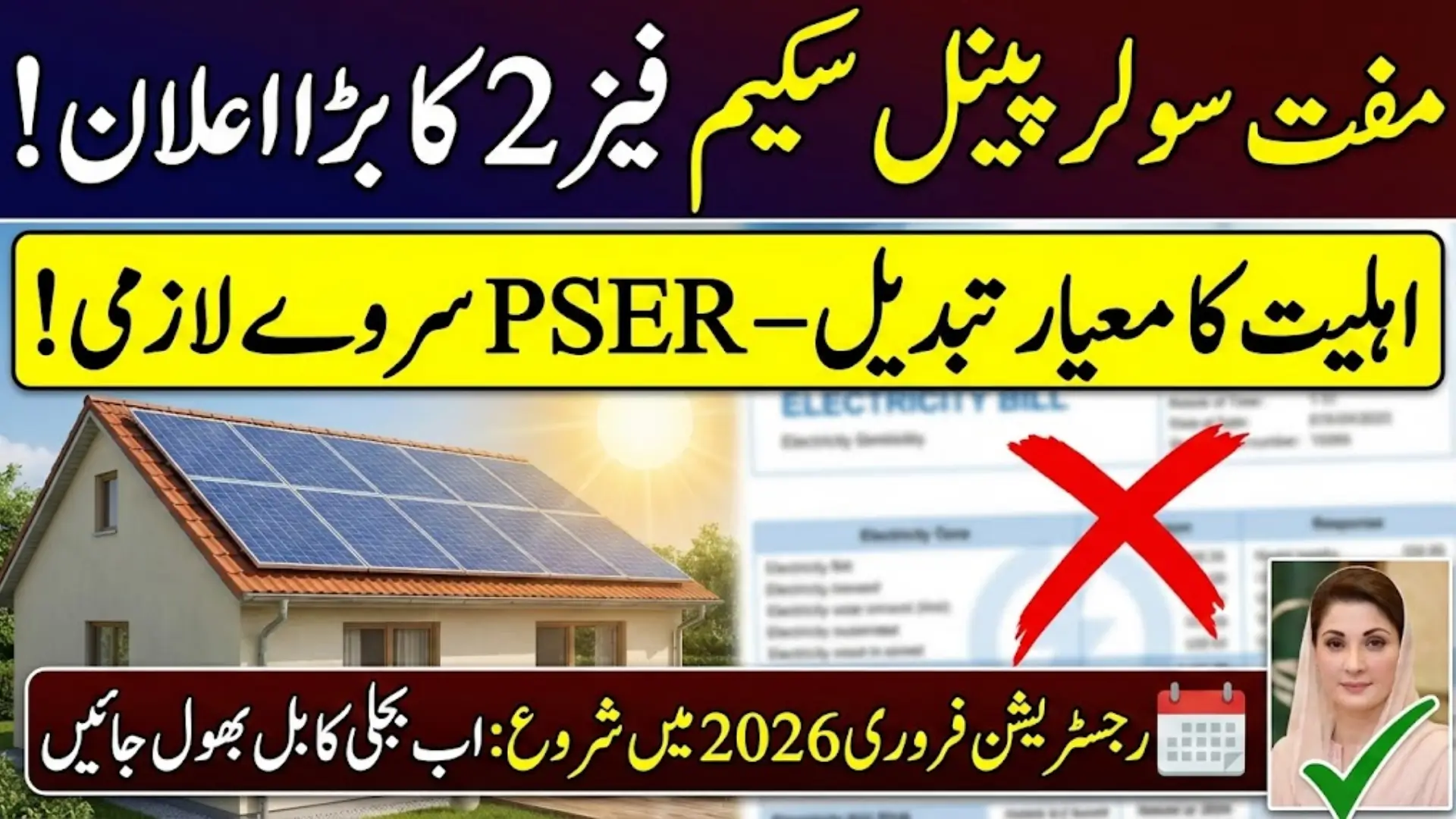
Free Solar Panel Scheme Phase 2
Free Solar Panel Scheme Phase 2 Electricity has become one of the biggest monthly expenses for households in Punjab. Over the last year, I have personally seen families cutting down on basic needs just to pay their power bills. Load-shedding, unpredictable tariffs, and inflation have pushed many middle- and low-income households toward financial stress. In this situation, the Free Solar Panel Scheme Phase 2 (2026) has emerged as a much-needed relief initiative by the Punjab government.
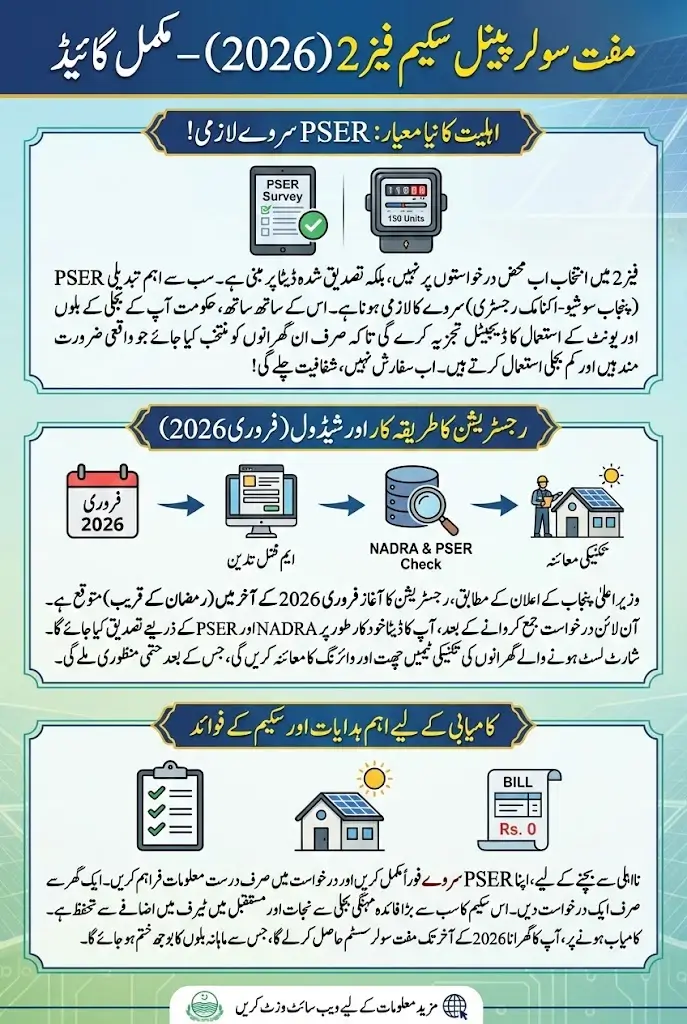
This phase is more organized, more transparent, and more focused on real need than earlier programs. The eligibility criteria have been changed, and selection will now depend on verified data rather than simple applications. Below is a complete, detailed, and easy-to-understand guide written for Pakistani citizens so they can clearly understand how this scheme works and how to prepare.
You Can Also Read: Great News Regarding Employee Allowances
Introduction to Free Solar Panel Scheme Phase 2 (2026)
The Free Solar Panel Scheme Phase 2 is a government-backed initiative designed to help domestic electricity consumers reduce their dependence on the national grid. By providing free solar panels to selected households, the Punjab government aims to lower electricity bills while promoting clean and renewable energy across the province.
What makes this phase important is its timing and structure. With power prices rising every few months, solar energy is no longer a luxury but a necessity. The government has learned from the first phase and introduced a more refined system to ensure that benefits reach families who genuinely need financial relief, especially before the peak summer season.
You Can Also Read: Punjab Ration Card Scheme For Poor And Deserving
Official Announcement by Punjab Government for Phase 2
Punjab Chief Minister Maryam Nawaz has officially confirmed the launch of Phase 2 registration in 2026, with the process expected to begin at the end of February, around the start of Ramadan. This announcement has brought hope to thousands of households who could not benefit from the earlier phase.
According to government officials, the scheme will follow a strict timeline. Registration will be followed by data verification, technical inspections, and phased installation. Just like the previous cycle, the government plans to complete the distribution of free solar panels by the end of 2026, ensuring timely implementation.
You Can Also Read: Punjabs New Poverty Relief Program to Offer Rs 45,000 Monthly
What Makes Phase 2 Different From Previous Solar Phases
Phase 2 is not just an extension of the old scheme; it is a redesigned program. Instead of relying mainly on self-declared information, the government will now use verified databases to assess eligibility. This change directly addresses complaints of misuse and favoritism reported earlier.
Key improvements in Phase 2 include:
- Mandatory PSER survey verification
- Electricity bill and unit consumption analysis
- Digital CNIC-based filtering
- Reduced manual interference in selection
These steps make the scheme more transparent and fair for ordinary citizens.
You Can Also Read: Ramadan Nighaban Package 2026 in Punjab
PSER Survey Requirement A Mandatory Condition
One of the most important changes in Phase 2 is the mandatory PSER (Punjab Socio-Economic Registry) survey. From my experience, many people ignore surveys, thinking they are optional, but in this case, PSER is the foundation of eligibility.
The PSER survey allows the government to understand:
- Household income level
- Family size and living conditions
- Overall financial stability
Without a completed PSER survey, even a deserving household will not be considered. This single requirement can decide acceptance or rejection.
You Can Also Read: CM Punjab Laptop Scheme 2026 Phase-II
Electricity Bill Evaluation Process Explained
Electricity consumption is another major deciding factor in the solar scheme. The government will check your monthly electricity units and average bill amount to assess whether you actually need assistance.
Households with low to moderate electricity usage are prioritized because:
- They are more affected by tariff increases
- They usually cannot afford private solar systems
- Their consumption matches small domestic solar capacity
Excessively high usage often indicates higher income, which can lead to disqualification.
You Can Also Read: Apna Khait Apna Rozgaar Program For Farmers
Updated Eligibility Criteria for Solar Scheme 2026
The eligibility criteria for Phase 2 have been clearly defined to avoid confusion and misuse. Applicants must meet all conditions, not just one or two.
Main eligibility conditions include:
- Permanent resident of Punjab
- Domestic electricity meter
- Completed PSER survey
- Acceptable electricity usage level
- Residential property suitable for installation
Only applicants fulfilling all requirements will move forward in the selection process.
Who Has Higher Chances of Selection in Phase 2
Although many people may meet basic eligibility, some households have higher priority due to their economic condition and energy usage patterns. The government has clearly indicated that priority will be given where need is greatest.
High-priority groups include:
- Low-income families registered in welfare programs
- Households with consistent low electricity consumption
- Residents of rural or underdeveloped areas
These groups are more likely to be shortlisted during the verification stage.
You Can Also Read: Apni Zameen Apna Ghr For Free 3 Marla Plot With 15 Lakh
Registration Start Date and Expected Schedule
According to official updates, registration is expected to start at the end of February 2026, aligning with the beginning of Ramadan. This timing is important because electricity usage usually rises after Ramadan as summer approaches.
The expected registration flow includes:
- Submission of application
- Automatic data verification
- Shortlisting of eligible households
- Technical inspection of selected homes
Only shortlisted applicants will be contacted for the next steps.
You Can Also Read: Safe City New E-Challan SMS System Announced
Selection, Verification, and Final Approval Stages
After registration, applications go through a fully digital verification process. CNIC details are verified through NADRA, PSER data is cross-checked, and electricity usage is confirmed from utility records.
Once digital verification is complete, technical teams visit shortlisted homes to:
- Inspect roof strength
- Check sunlight exposure
- Assess wiring compatibility
Final approval is granted only after successful inspection.
You Can Also Read: Preparations Have Been Made to Change School
Distribution Timeline of Free Solar Panels
Based on previous government experience, the distribution of solar panels will be completed in phases throughout 2026. The target is to finish all installations by the end of the year, ensuring households benefit before future tariff hikes.
Installations will be monitored to ensure:
- Proper equipment setup
- Safety compliance
- Long-term system performance
This structured approach helps maintain quality and trust.
Key Rules Applicants Must Follow
To remain eligible, applicants must strictly follow all scheme rules. Even a small violation can result in disqualification.
Important rules to remember:
- Only one application per household
- No false or incomplete information
- Technical approval is mandatory
- Data must match official records
Honesty and accuracy are essential throughout the process.
You Can Also Read: Punjab Chief Minister Approves Rs 47 Billion Ramadan
Benefits of Phase 2 Solar Scheme for Households
The biggest benefit of this scheme is long-term financial relief. Once installed, solar panels can reduce or completely eliminate monthly electricity bills, which is a major burden for many families.
Additional benefits include:
- Protection from future electricity price hikes
- Greater control over household energy
- Contribution to environmental protection
For many households, this scheme can change daily life.
You Can Also Read: Parwaaz Card Registration Start: Know Required Documents
Common Mistakes That Can Lead to Rejection
Over the years, I have seen many deserving applicants lose opportunities due to avoidable mistakes. Awareness is the best way to avoid disappointment.
Common rejection reasons include:
- PSER survey not completed
- Incorrect CNIC or meter details
- High electricity consumption
- Mismatch between records and application
Careful preparation can significantly improve chances.
Eligibility and Selection Overview
| Category | Details |
|---|---|
| Mandatory Requirement | PSER survey completed |
| Electricity Check | Monthly units and bill amount |
| Priority Applicants | Low-income, rural households |
| Disqualification | High usage, false information |
| Distribution Target | End of 2026 |
You Can Also Read: Lesco Bill Check By 14 Digit Reference Number
Final Words for Interested Applicants
The Free Solar Panel Scheme Phase 2 Start in 2026 is a serious and well-structured effort to support struggling households in Punjab. This time, selection is based on verified data, not speed or influence, which is a positive change for ordinary citizens.
If you want to benefit, complete your PSER survey, keep your electricity usage reasonable, and ensure all information is accurate. With proper implementation, this scheme has the potential to reshape domestic energy usage in Punjab and provide long-term relief to thousands of families.