
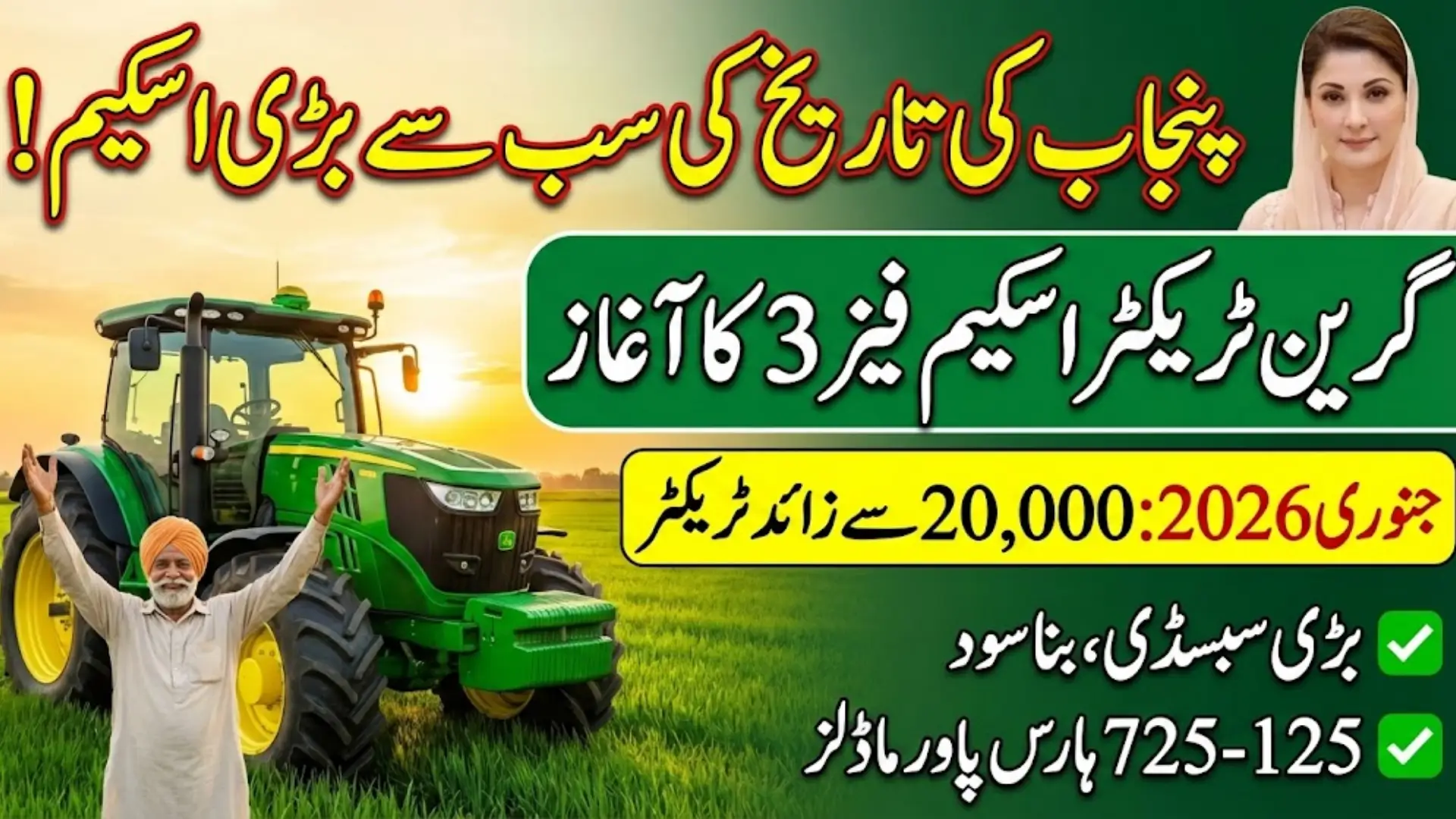
Green Tractor Scheme Phase 3 Model And Subsidy
Green Tractor Scheme Phase 3 Model And Subsidy agriculture is once again at the center of government attention as Green Tractor Scheme Phase 3 is set to begin in January 2026. This phase is being discussed widely in villages, mandis, and farming communities because it directly addresses one of the biggest problems farmers face today: access to modern machinery without falling into debt. For many farmers in Punjab, owning a tractor is not just about convenience, it is about survival, respect, and independence.
From what I have seen on the ground, farmers often rely on rented tractors, which delays sowing and increases costs. Phase 3 is designed to break this cycle. By offering subsidized tractors on a large scale, the Punjab government is trying to ensure that farmers can manage their land on time and improve overall productivity without depending on middlemen.
You Can Also Read: Green Tractor Scheme Phase 3 2026
Punjab’s Agricultural Shift Enters a New Phase in 2026
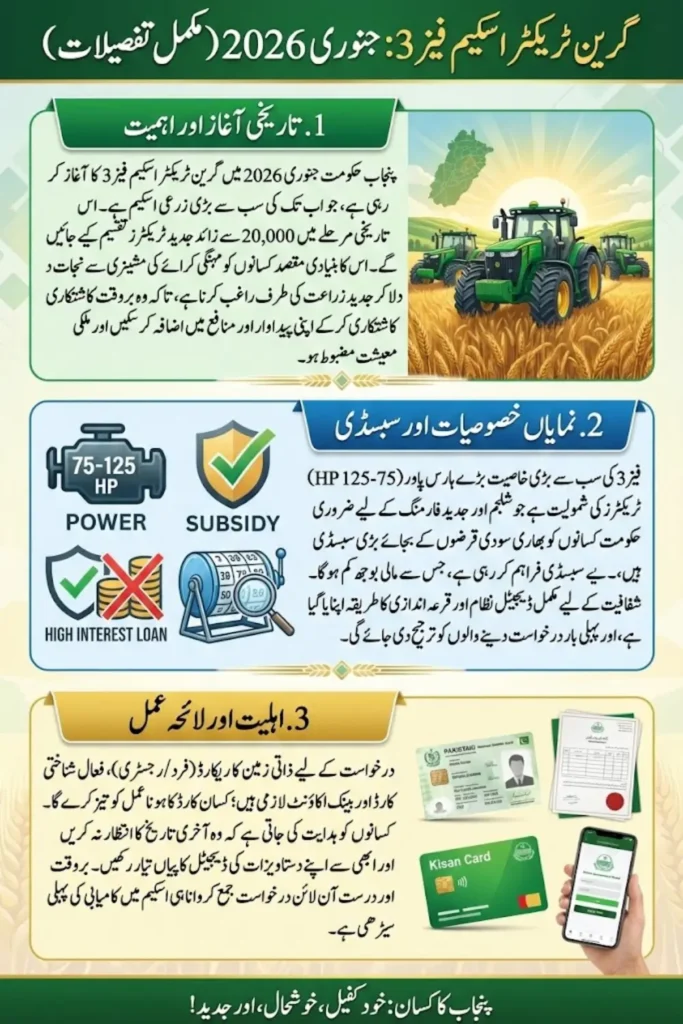
January 2026 is expected to be a major milestone for Punjab’s farming sector. The government has announced plans to distribute more than 20,000 tractors under Phase 3, making it the largest rollout so far. This shows that the focus is no longer limited to pilot projects but has shifted toward long-term agricultural strengthening.
This phase reflects a broader vision where mechanization is seen as essential, not optional. With rising input costs and climate challenges, farmers need efficient tools to remain competitive. By increasing the number of tractors and expanding horsepower options, the government is acknowledging real challenges faced by farmers across Punjab.
You Can Also Read: Green Tractor Phase 3 Balloting Result by CNIC
What Makes Phase 3 Different From Earlier Rounds
Phase 3 is not a repeat of previous phases; it is an expansion with a clear strategy. Earlier rounds helped many farmers, but demand remained high, especially for stronger tractors suitable for larger landholdings. This time, planning has been done after reviewing feedback from farmers and agricultural experts.
Key features that set Phase 3 apart include:
- Larger overall allocation compared to previous phases
- Strong focus on high-horsepower tractors for advanced farming
- Improved transparency through digital verification
- Strict preference for first-time beneficiaries
These changes aim to ensure that support reaches those who truly need it, while also improving trust in the scheme.
You Can Also Read: Vivo Y500i Launch Details 2-Day Battery Backup
Tractor Models Planned for Distribution in 2026
One of the most discussed aspects of Phase 3 is the variety of tractor models. Farmers across Punjab have different needs depending on land size, crop type, and soil condition. Keeping this in mind, the government has planned multiple horsepower categories.
A significant highlight is the inclusion of 9,500 high-horsepower tractors (75–125 HP). These models are particularly useful for deep ploughing, laser leveling, and large-scale cultivation. Smaller horsepower tractors will still be available for farmers managing limited land, ensuring that no segment is ignored.
Government Subsidy Structure for Farmers
A common concern among farmers is whether this scheme involves bank loans. Based on official information, the subsidy under Green Tractor Scheme Phase 3 is government-backed, meaning farmers do not need to take high-interest loans. This directly reduces financial stress.
The subsidy structure helps farmers in several ways:
- Lowers the upfront cost of tractors
- Reduces dependence on informal lenders
- Makes ownership possible without long-term debt
This approach is particularly important for small and medium farmers who often avoid banks due to complex procedures and fear of default.
You Can Also Read: Parvaaz Psdf Org Pk Registration Portal For Students
Who Can Benefit From the 2026 Tractor Allocation
Eligibility criteria may seem strict, but they are designed to ensure fairness and transparency. The goal is to make sure that subsidies reach new farmers rather than repeating benefits for the same households.
Below is a clear overview of eligibility requirements:
| Eligibility Factor | Requirement |
|---|---|
| Residency | Permanent resident of Punjab |
| CNIC | Valid CNIC in applicant’s name |
| Land Ownership | Minimum land as per tractor category |
| Kisan Card | Preferred for verification |
| Loan Status | Must not be a bank loan defaulter |
| Household Limit | One tractor per household |
| Previous Schemes | Not benefited from earlier phases |
These conditions ensure that public funds are used responsibly and reach deserving farmers.
You Can Also Read: PM Laptop Scheme 2026 Online Registration
Importance of Land Ownership and Verification
Land ownership plays a critical role in determining tractor eligibility and category. Digital land records and verified Fard entries help speed up the process and reduce disputes. From past schemes, it is clear that applications with clear land records move faster.
The Kisan Card, while not compulsory, helps authorities verify farmer details quickly. Farmers already registered with agricultural departments usually face fewer delays, which is why having updated records is strongly advised.
Documents Farmers Should Prepare in Advance
Many applications fail not because farmers are ineligible, but because documents are incomplete or unclear. Preparing documents early can save weeks of delay and frustration.
Farmers should ensure they have:
- CNIC (front and back, clearly scanned)
- Proof of land ownership (Registry or digital Fard)
- Recent passport-size photograph
- Kisan Card, if available
- Bank account details
- Active mobile number registered on CNIC
Uploading clear and correct documents increases the chances of smooth approval.
You Can Also Read: Green Tractor Scheme 2026 Phase III Online Registration
Online Application Process Explained Simply
The online application system has been introduced to reduce corruption and eliminate the role of agents. Even farmers with basic mobile knowledge can apply, often with help from family members or local facilitation centers.
The process includes:
- Visiting the official Green Tractor Scheme portal
- CNIC and mobile verification through OTP
- Entering personal and land details
- Selecting the appropriate tractor category
- Uploading documents and submitting the form
After submission, downloading and saving the confirmation slip is very important.
Selection Method and Transparency Measures
Tractor allocation under Phase 3 will be done through a computerized lottery system. This method ensures that all eligible applicants have an equal chance, regardless of influence or location.
Once the draw is completed, selected farmers will be notified through official channels. There is no role of agents or extra payments, which helps maintain transparency and public trust.
You Can Also Read: eBiz Portal Login For Punjab Scheme
Role of CM Punjab’s Vision in the Scheme
Chief Minister Maryam Nawaz has repeatedly highlighted that farmer independence is key to Punjab’s economic stability. According to her, owning a tractor is not just about farming—it is about dignity and control over one’s livelihood.
She has also emphasized that government support now covers the entire agricultural cycle:
- Sowing
- Harvesting
- Marketing of crops
This holistic approach aims to make Punjab self-sufficient in food production.
How Modern Tractors Improve Farm Output
Modern tractors significantly reduce the time and effort required for farming operations. Tasks that once took several days can now be completed within hours, allowing farmers to meet critical sowing and harvesting windows.
Benefits include:
- Better land preparation
- Reduced labor costs
- Improved crop yield
- Fuel-efficient operations
These advantages directly impact farm income and long-term sustainability.
Economic Impact on Rural Punjab
When tractors enter villages, their impact goes beyond individual farms. Local employment increases, service-based income grows, and rural economies become more active. Tractor ownership often leads to shared usage, benefiting multiple households.
Over time, mechanization helps:
- Lower production costs
- Improve food security
- Strengthen Punjab’s agricultural exports
What Farmers Should Do Before January 2026
Farmers are advised not to wait until the last moment. Early preparation can make the application process smoother and stress-free.
Important steps include:
- Updating CNIC and land records
- Preparing clear document scans
- Following only official government announcements
Being proactive can make a significant difference.
Final Overview
Green Tractor Scheme Phase 3 is not just another subsidy announcement; it is a strong signal that Punjab’s future depends on empowered farmers. By providing modern machinery at subsidized rates, the government is helping farmers move toward independence and stability.
For thousands of farming families, January 2026 could mark the beginning of a new chapter—one where farming becomes more efficient, profitable, and respected across Punjab.