
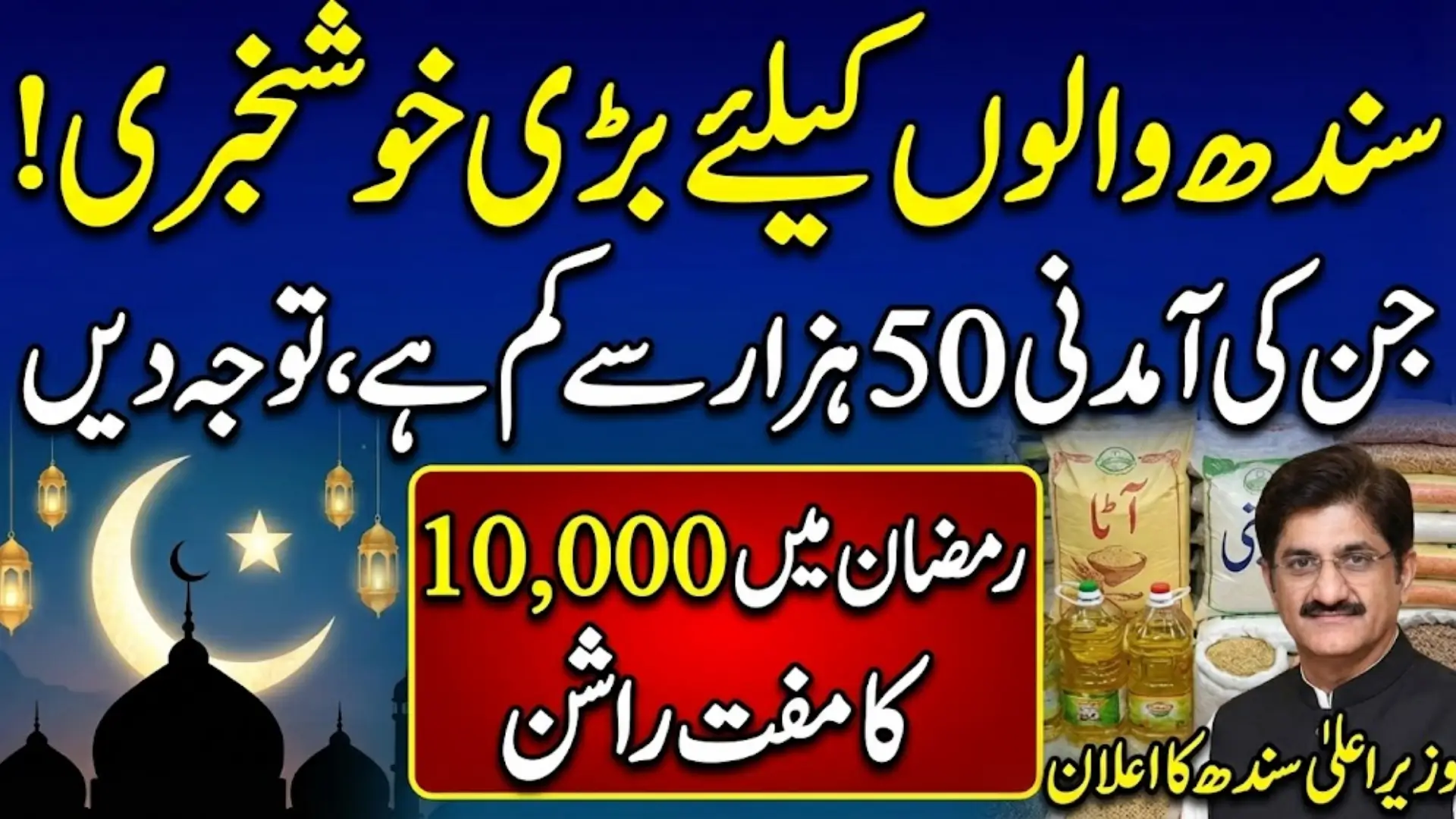
Ramadan Relief 2026
Ramadan Relief 2026 With Ramadan 2026 approaching, preparations for a large-scale Ramadan relief package have already started especially for the people of Sindh. Over the past few years, rising inflation, expensive food items, and unstable income sources have made it difficult for many families to manage even basic necessities. Ramadan, which already increases household food expenses, often becomes an added burden for low-income households.
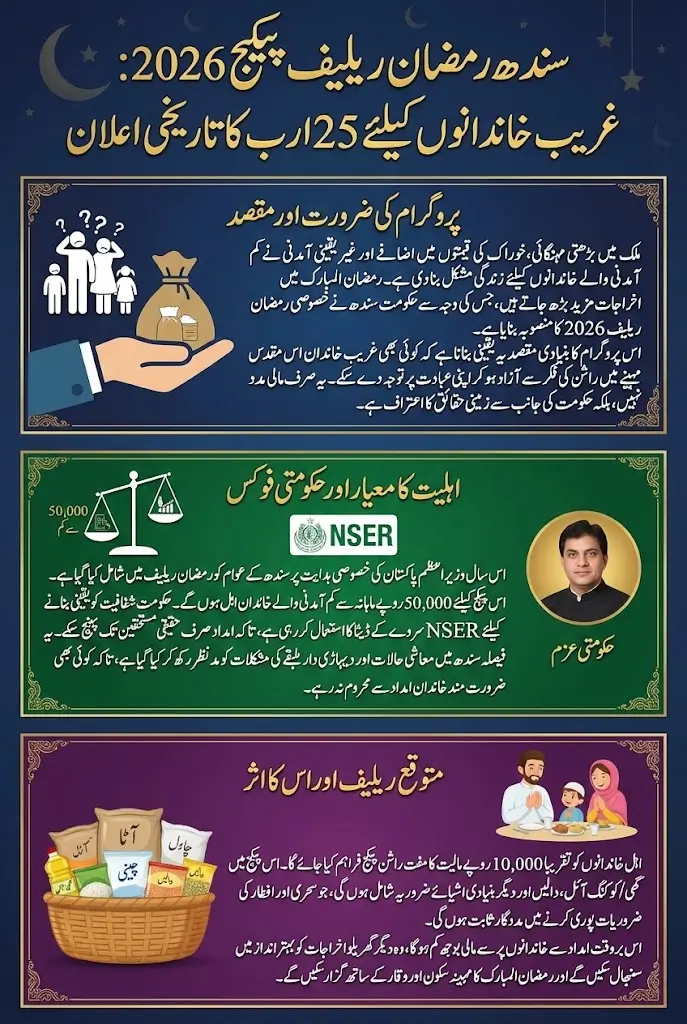
رمضان ریلیف 2026 رمضان 2026 کے قریب آتے ہی خاص طور پر سندھ کے لوگوں کے لیے بڑے پیمانے پر رمضان ریلیف پیکج کی تیاریاں شروع ہو چکی ہیں۔
Keeping these realities in mind, the government has planned a special Ramadan Relief 2026 initiative for Sindh. The main purpose of this program is to ensure that families with limited income can observe the holy month without worrying about daily ration expenses. Unlike earlier years where relief was sometimes delayed or limited, this time the focus is on early planning and better targeting of deserving families.
You Can Also Read: Basant Holidays Punjab 4 Days Confirm
Federal Government’s Special Focus on Sindh
This year, the Prime Minister of Pakistan has given clear instructions that the people of Sindh must also be included in Ramadan relief efforts. In the past residents of Sindh often raised concerns about unequal distribution of welfare programs. This time, the federal government has emphasized that Sindh should receive its fair share of relief.
The decision comes after reviewing economic conditions in the province, where many households depend on daily wages, small jobs, or informal work. Inflation has reduced purchasing power and many families earning modest incomes are now struggling to afford basic groceries.
According to officials, coordination between federal and provincial departments has already begun. This coordination is expected to make the relief process smoother, reduce confusion, and ensure that aid reaches people on time rather than after Ramadan has already passed.
You Can Also Read: Petrol Price In Pakistan Today
Total Budget Allocation for Ramadan Relief
For Ramadan Relief 2026 a total budget of Rs 25 billion has been allocated for Sindh alone. This allocation clearly shows that the government is taking the issue of food insecurity seriously. A budget of this size allows authorities to provide meaningful assistance instead of symbolic relief.
In practical terms, this funding is expected to support a large number of households across urban and rural Sindh. Rather than spreading resources too thin, the plan focuses on providing adequate ration support to families that truly need it.
You Can Also Read: 8171 Web Portal 2026 Check Febuary Qist 14500
The key financial details of the package are summarized below:
| Category | Details |
|---|---|
| Total Budget | Rs 25 Billion |
| Province Covered | Sindh |
| Target Group | Low-income families |
| Monthly Income Limit | Below Rs 50,000 |
| Type of Assistance | Free ration support |
| Estimated Relief Value | Rs 10,000 per family |
Such a structured allocation also increases public expectations, making transparency and proper monitoring essential.
You Can Also Read: Pser Punjab Gov Pk Registration 2026
Income Limit Set for Eligible Families
One of the most important features of the Ramadan Relief Package 2026 is the income eligibility condition. According to the available information families with a monthly income of less than Rs 50,000 will be considered eligible for this program.
This income threshold reflects current economic conditions in Pakistan. With rising utility bills, school fees, rent, and food prices families earning under this amount often struggle to survive, especially during Ramadan. The income cap helps ensure that relief goes to those who genuinely need it rather than those who are financially stable.
This eligibility condition aims to:
- Focus on low-income and vulnerable households
- Reduce misuse of government funds
- Improve fairness in relief distribution
By setting clear criteria, the government hopes to avoid complaints and ensure transparency.
You Can Also Read: Ramzan Nighban Program 2026 Online Registration
Expected Relief Amount and Type of Support
According to early estimates, eligible families may receive free ration worth up to Rs 10000 during Ramadan. This ration-based support is designed to help households manage daily food needs for sehri and iftar without additional financial stress.
Instead of cash payments, ration assistance ensures that support is used for essential food items. This approach has been preferred in recent welfare programs because it directly addresses food insecurity and prevents misuse of funds.
The expected ration package may include:
- Wheat flour and rice
- Cooking oil or ghee
- Pulses and basic grocery items
For many families, this support can mean the difference between borrowing money and managing Ramadan expenses independently.
You Can Also Read: Electric Bike Scheme 2026 Apply for Easy 2-Year Installments
Role of NSER Survey in the Selection Process
The National Socio-Economic Registry NSER survey will be used to identify eligible families for Ramadan Relief 2026. This survey already contains detailed data about households, including income level, family size, and living conditions.
Using NSER data allows the government to assess each household’s poverty score, making the selection process more objective and transparent. Families already registered in the NSER database may not need to go through a new survey, which can save time and reduce stress.
This data-driven approach helps ensure:
- Fair identification of beneficiaries
- Reduced human interference
- Faster verification process
It also minimizes chances of favoritism or political influence.
You Can Also Read: Punjab Dhee Rani Program Phase 2 Quota Increase
Registration Guidelines and Official Instructions
Authorities have indicated that official registration instructions will be issued soon. These instructions will guide eligible families on how to become part of the Ramadan Relief 2026 program.
Registration is expected to rely largely on existing NSER records. Beneficiaries may receive information through:
- Official government announcements
- SMS alerts on registered mobile numbers
- Government welfare centers
Citizens are advised to avoid unofficial agents or fake messages asking for fees, as registration for such programs is usually free.
You Can Also Read: 9999 Ramadan Relief Package Update
Identifying Deserving Beneficiaries Fairly
A major challenge in welfare programs is ensuring that aid reaches the right people. This time, the government is emphasizing fair and data-based selection rather than manual lists.
By combining income limits with NSER poverty scores, authorities aim to identify families that are genuinely struggling. This reduces the chances of well-off individuals benefiting from relief meant for the poor.
Fair identification also builds public trust and encourages people to cooperate with future government initiatives.
Relief Impact on Daily Ramadan Expenses
For low-income households, Ramadan often means higher grocery bills and additional household expenses. The Ramadan Relief 2026 package is expected to ease this burden significantly.
With free ration support, families may find it easier to manage:
- Daily food requirements
- Utility bills
- Medical or emergency expenses
This relief allows families to focus on the spiritual aspects of Ramadan rather than worrying about how to afford basic meals.
You Can Also Read: Shab E Barat 2026 Holiday In Pakistan
What Applicants Should Prepare in Advance
Although detailed registration instructions are yet to be announced, families can prepare in advance to avoid issues later.
It is advisable to:
- Ensure CNIC details are correct and updated
- Check NSER registration status
- Keep household information accurate
Early preparation can help prevent delays or rejection once the registration process officially begins.
Transparency Measures and Monitoring
Given the size of the Rs 25 billion allocation, monitoring and transparency will be crucial. Authorities are expected to track distribution through official records and digital systems.
Transparent implementation not only protects public funds but also ensures that relief reaches deserving families on time. Citizens may also be given channels to report complaints if they face issues during distribution.
You Can Also Read: Gold and Silver Prices Hit Historic Peaks in Pakistan
Final Thoughts
The Ramadan Relief Package 2026 for Sindh appears to be a well-planned initiative aimed at supporting low-income families during one of the most financially demanding months of the year. With clear income criteria, a significant budget, and reliance on NSER data, the program has strong potential to make a real impact.
If implemented honestly and efficiently, this relief effort can help thousands of families observe Ramadan with peace of mind and dignity. For many households, this support is not just assistance—it is a much-needed lifeline during difficult economic times.