
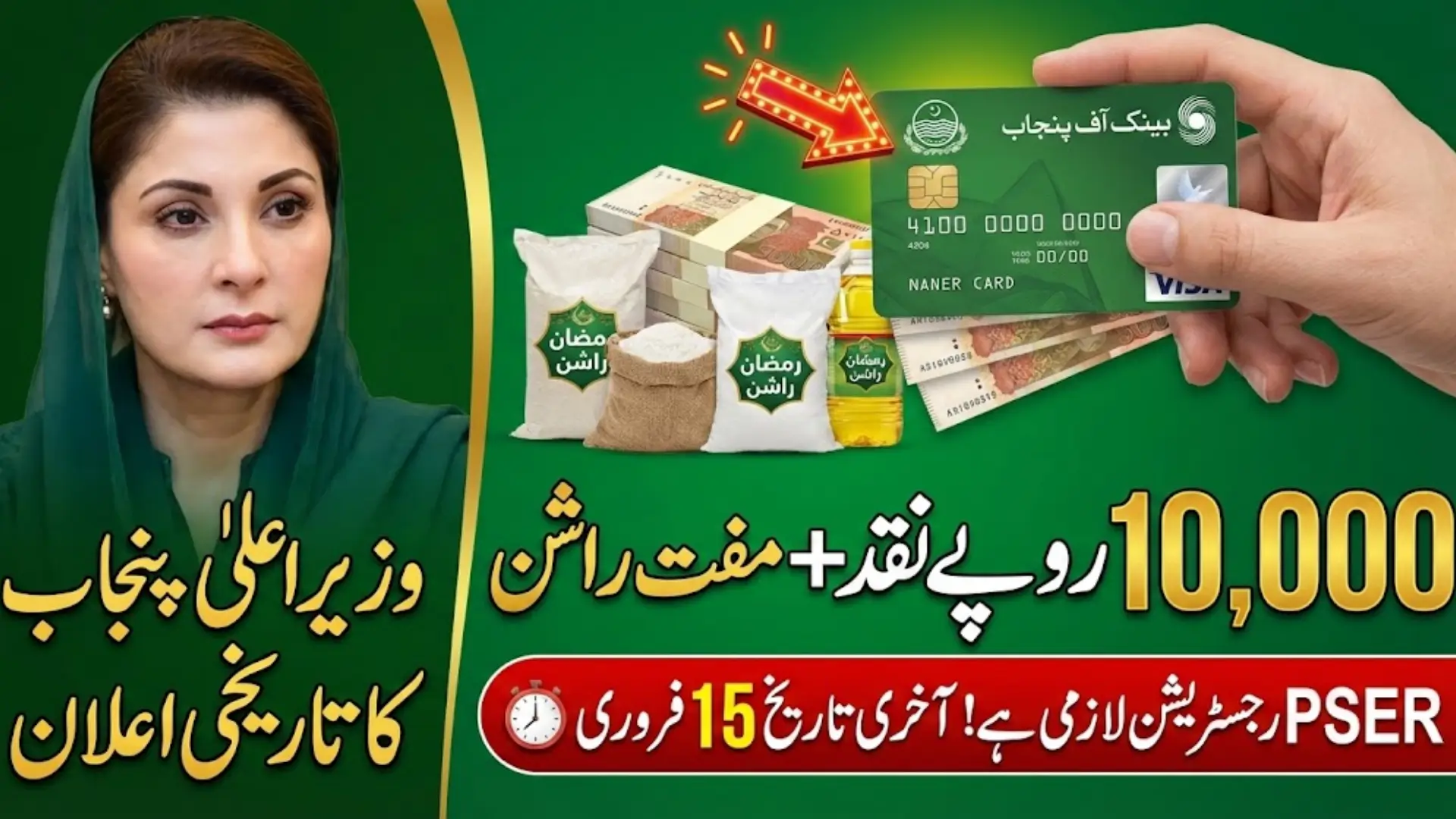
Ramadan Nighaban Package 2026 in Punjab
Ramadan Nighaban Package 2026 in Punjab As Ramadan approaches every year, millions of families across Punjab worry about how they will manage rising food prices and daily household expenses. Having closely observed government welfare schemes over the years, one recurring issue stands out: many deserving families miss out on assistance not because they are ineligible, but because their information is missing or outdated in official records. The Ramadan Nighaban Package 2026 is another major relief initiative, but this time the government has clearly linked benefits to PSER registration.
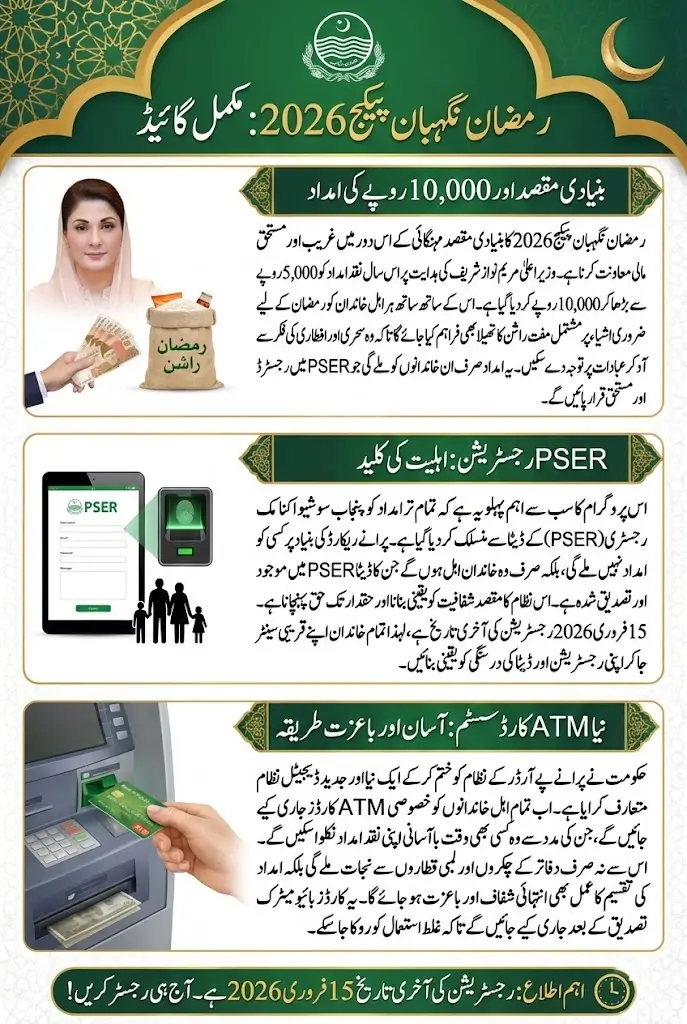
The Punjab government, led by Chief Minister Maryam Nawaz Sharif, has announced that families registered in the Punjab Socio-Economic Registry (PSER) will be eligible for cash assistance of Rs. 10,000 along with free ration. This article explains the program in simple terms so that even an ordinary citizen can understand how it works and why timely registration is so important.
You Can Also Read: CM Punjab Laptop Scheme 2026 Phase-II
Ramadan Nighaban Package 2026: A Major Relief Initiative in Punjab
The Ramadan Nighaban Package 2026 has been designed to support low-income households during the holy month when food consumption increases and incomes often remain the same. For daily wage earners, widows, and families already struggling with inflation, Ramadan becomes financially challenging. This relief package aims to reduce that pressure so families can focus on worship rather than survival.
Unlike past initiatives that relied heavily on manual identification, this program uses verified data to ensure fairness. The government’s intention is to provide meaningful support rather than symbolic aid, which is why both cash and ration support have been included.
Key objectives of the package include:
- Supporting poor and deserving families during Ramadan
- Ensuring transparent and merit-based distribution
- Reducing the impact of inflation on essential food needs
You Can Also Read: Apna Khait Apna Rozgaar Program For Farmers
Vision Behind the Program Under CM Maryam Nawaz Sharif
Chief Minister Maryam Nawaz Sharif has repeatedly stated that welfare programs must be data-driven and corruption-free. In previous years, complaints about favoritism and delays were common. This time, the government has shifted focus toward digital verification and structured databases.
By linking the Ramadan Nighaban Package to PSER, the government aims to ensure that assistance reaches only those who genuinely need it. This approach also allows the administration to plan future welfare schemes more effectively by understanding poverty trends across Punjab.
The broader vision includes:
- Ending guesswork in welfare distribution
- Strengthening public trust in government relief programs
- Creating a long-term social protection framework
You Can Also Read: Apni Zameen Apna Ghr For Free 3 Marla Plot With 15 Lakh Loan
What Is PSER and Why It Is the Key Requirement
PSER, or Punjab Socio-Economic Registry, is a centralized database that stores information about households, including income level, family size, housing condition, and employment status. This data helps the government assess which families fall below the poverty threshold.
For the Ramadan Nighaban Package 2026, PSER registration is mandatory. Even if a family received assistance in the past, outdated or missing PSER data can lead to exclusion. This requirement may feel strict, but it is meant to prevent misuse of public funds.
PSER plays a critical role by:
- Identifying deserving households accurately
- Preventing duplicate or false claims
- Supporting fair and transparent decision-making
You Can Also Read: Safe City New E-Challan SMS System
Financial Scope of Ramadan Nighaban Package 2026
The Punjab government has allocated a total budget of Rs. 30 billion for the Ramadan Nighaban Package 2026. This significant amount shows that the program is intended to benefit a large number of families across urban and rural areas of Punjab.
Such a large financial commitment also means stricter monitoring. Every beneficiary will be selected through PSER data, reducing chances of leakage and ensuring that public money is spent responsibly.
| Program Aspect | Details |
|---|---|
| Total Budget | Rs. 30 Billion |
| Assistance Type | Cash + Free Ration |
| Selection Method | PSER Survey Data |
| Coverage Area | Entire Punjab |
Cash Assistance Increased to Rs. 10,000: What Changed This Year
One of the most important updates in 2026 is the increase in cash assistance from Rs. 5,000 to Rs. 10,000. Last year’s amount provided some relief, but it was not enough to cover the rising cost of food and utilities during Ramadan.
The increased amount reflects the government’s acknowledgment of inflation and its impact on low-income families. For many households, this cash assistance can cover essential groceries, electricity bills, or medical needs during Ramadan.
Reasons behind the increase include:
- Rising food and fuel prices
- Feedback from previous beneficiaries
- Desire to provide more meaningful support
You Can Also Read: Preparations Have Been Made to Change School
From Pay Orders to ATM Cards: A Smarter Distribution System
In earlier Ramadan relief programs, assistance was often distributed through pay orders. While effective, this method required beneficiaries to visit offices or banks, causing inconvenience and delays, especially for elderly people and women.
In 2026, the government has decided to issue ATM cards to eligible families. This change allows beneficiaries to withdraw cash easily from ATMs, giving them more control and dignity in accessing support.
Benefits of ATM card distribution include:
- Faster access to funds
- Reduced crowding at offices
- Greater transparency and convenience
Step-by-Step Overview of PSER Registration Process
PSER registration is not difficult, but it must be done carefully. Families are required to provide accurate personal and household information so their eligibility can be assessed correctly.
Many applicants make mistakes by entering incomplete data or incorrect CNIC details, which can result in rejection. Taking time to register properly can make a big difference.
Important points to remember:
- CNIC information must be accurate
- Household details should match reality
- Contact numbers should remain active
You Can Also Read: Punjab Chief Minister Approves Rs 47 Billion Ramadan Nighaban
Important Dates You Must Not Miss
Missing deadlines is one of the most common reasons people fail to receive assistance. The Punjab government has clearly announced the timeline for the Ramadan Nighaban Package 2026, and families are advised to act early.
Key dates to remember:
- Program launch: January 31, 2026
- Application start date: January 31, 2026
- PSER registration deadline: February 15, 2026
Who Can Qualify for the Ramadan Nighaban Package
The Ramadan Nighaban Package targets families who are genuinely struggling financially. Eligibility is determined through PSER data, not personal influence or recommendations.
Households with higher income levels or incomplete records may not qualify, even if they apply. This system ensures fairness but also highlights the importance of accurate registration.
General eligibility factors include:
- Low or irregular income
- Limited household assets
- Verified PSER registration
You Can Also Read: Parwaaz Card Registration Start: Know Required Documents
Free Ration and Cash Support: Combined Benefits Explained
In addition to cash assistance, eligible families will receive free ration containing essential food items commonly used during Ramadan. This support helps families manage daily Sehri and Iftar needs without additional financial stress.
The combination of cash and ration makes the program more effective than past initiatives that focused on only one form of assistance.
This combined approach helps families:
- Ensure food availability throughout Ramadan
- Use cash for other urgent needs
- Maintain dignity and choice
Why Early Registration Can Make a Difference
From past experience, early applicants face fewer problems. Late registrations often suffer from technical issues, incomplete verification, or missed deadlines.
Registering early also gives families time to correct mistakes if their application is flagged during verification. In welfare programs, timing often matters as much as eligibility.
Advantages of early registration:
- Smooth verification process
- Reduced risk of rejection
- Peace of mind before Ramadan
Final Reminder for Deserving Families in Punjab
The Ramadan Nighaban Package 2026 is a valuable opportunity for poor and deserving families in Punjab. However, the government has made one thing very clear: PSER registration is compulsory. Without it, even deserving households will not be considered.
Families are strongly advised to complete their PSER registration before February 15 and ensure all information is accurate. Acting early and responsibly can help ensure that much-needed assistance reaches your home during Ramadan.
You Can Also Read: Lesco Bill Check By 14 Digit Reference Number