
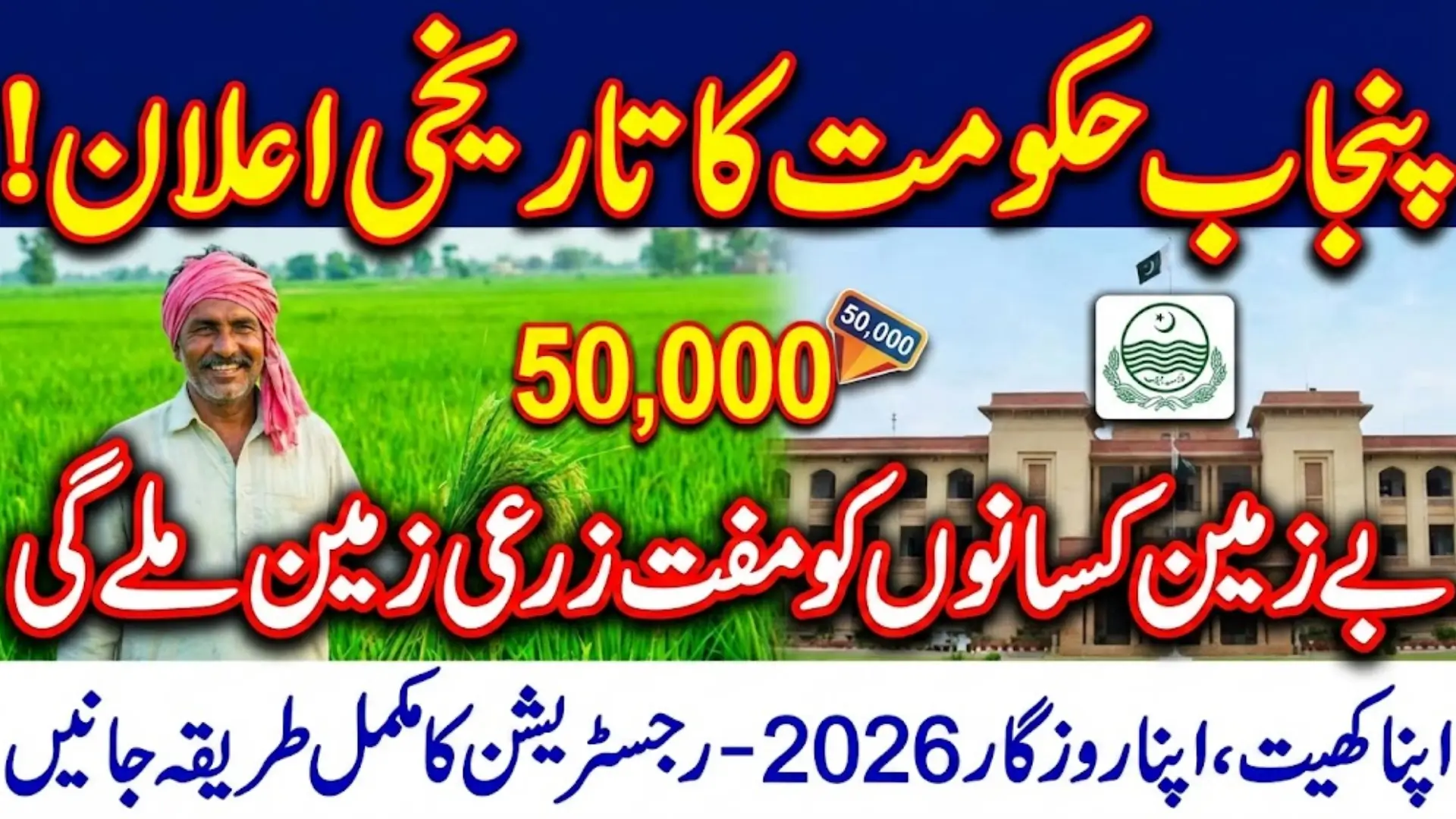
Apna Khait Apna Rozgaar Program
Apna Khait Apna Rozgaar Agriculture has always been the backbone of Punjab’s economy, yet thousands of capable farmers remain unemployed simply because they do not own land. Over the years, I have seen many skilled rural workers forced to leave farming and look for daily wages in cities. The Punjab government has finally addressed this long-standing issue through the Apna Khait Apna Rozgaar Program, a major welfare initiative aimed at providing agricultural land to landless and small farmers.
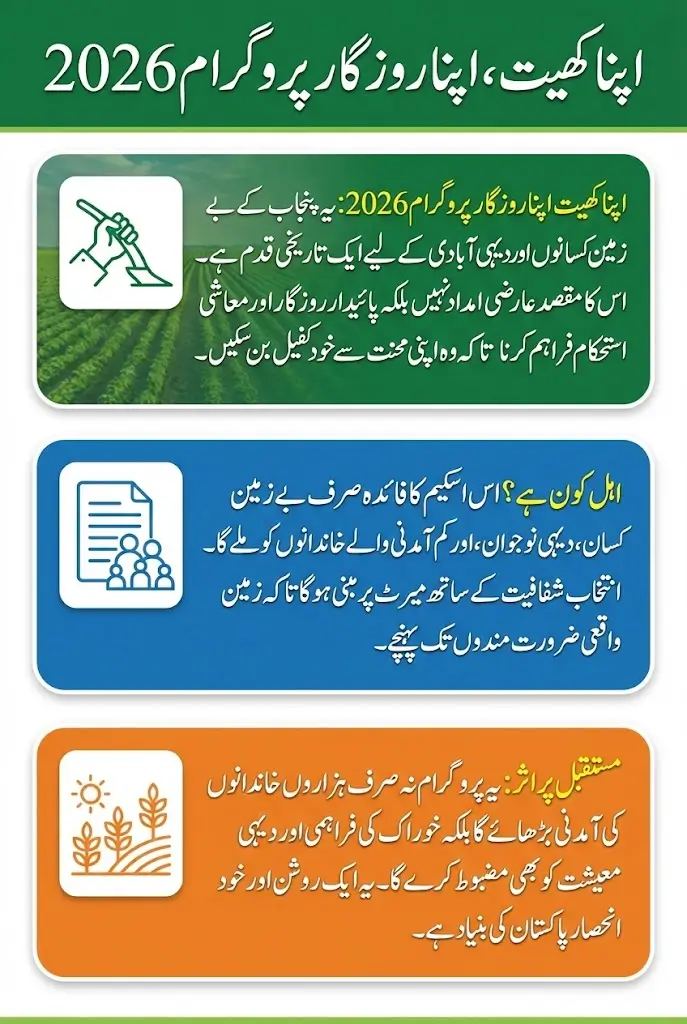
This program is not a short-term relief scheme. Instead, it focuses on long-term employment, food security, and economic stability by giving people the most valuable resource in agriculture: land. Around 50,000 deserving citizens are expected to benefit, making it one of the most impactful rural initiatives in recent years.
You Can Also Read: Apni Zameen Apna Ghr For Free 3 Marla Plot
Understanding the Vision Behind the Scheme
The vision of this program is rooted in a simple principle: people who know farming should be enabled to farm. Rather than distributing cash or subsidies that disappear within months, the government has chosen a sustainable model where beneficiaries earn through their own hard work.
From what I have observed in rural Punjab, lack of land is the biggest barrier to progress. By allocating agricultural land, the government aims to:
- Restore dignity to farming as a profession
- Reduce dependency on urban labor markets
- Strengthen rural economies through productivity
- Encourage long-term self-reliance instead of aid
This approach aligns agriculture with employment, which is why the program stands out.
You Can Also Read: Safe City New E-Challan SMS System
Who Can Benefit From This Farming Scheme
The Apna Khait Apna Rozgaar Program is clearly designed for ordinary citizens, not large landowners or investors. It focuses on people who already have a connection with agriculture but lack ownership or access to land.
This scheme is suitable for:
- Landless farmers with practical farming experience
- Rural families dependent on agriculture for income
- Youth seeking dignified employment in villages
- Low-income households with limited resources
By targeting the right group, the government ensures that land is cultivated properly and benefits reach those who need them most.
You Can Also Read: Preparations Have Been Made to Change School Hours
Land Distribution Framework Under the Program
Land will be allotted under a structured and regulated framework to avoid misuse. The government has emphasized that land provided under this scheme must be actively cultivated and cannot be used for non-agricultural purposes.
Important points of the land framework include:
- Land allotment based on availability and policy
- Lease or conditional use rights instead of open sale
- Mandatory agricultural activity on allotted land
- Regular monitoring by relevant authorities
This ensures that land remains productive and contributes to Punjab’s agricultural output.
You Can Also Read: Punjab Chief Minister Approves Rs 47 Billion Ramadan
Priority Groups Considered for Selection
Not all applicants will be treated equally, and that is intentional. Priority will be given to citizens who face the greatest economic hardship and have no alternative livelihood options.
Preference categories include:
- Completely landless farmers
- Rural youth with farming skills
- Low-income families
- Households dependent on seasonal farm work
This priority system helps prevent misuse and supports social balance in rural areas.
You Can Also Read: Parwaaz Card Registration Start: Know Required Documents
How the Application System Will Work
To make the process accessible for everyone, the Punjab government plans to introduce both online and offline application methods. This dual approach ensures that even citizens without internet access can apply without difficulty.
Applicants will be required to submit personal, residential, and agricultural background details. All information will be verified through official records to maintain transparency and fairness throughout the selection process.
Online Application Process (Expected Method)
Once the official portal is launched, online registration will become the fastest way to apply. This option will particularly benefit educated rural youth and those living near urban areas.
The expected online process includes:
- Accessing the official Punjab government portal
- Entering CNIC and personal information
- Providing details of farming or rural background
- Submitting the application electronically
- Waiting for verification and response
Applicants should rely only on official platforms to avoid fraud.
You Can Also Read: Lesco Bill Check By 14 Digit Reference Number
Manual Application Option Through Local Offices
For citizens in remote areas, offline registration will remain available. This ensures that lack of technology does not become a barrier to opportunity.
Offline applications can be submitted through:
- Agriculture Department offices
- Union Council offices
- District administration centers
Applicants will need to submit physical documents, which will then be entered into the official system for verification.
You Can Also Read: PM E Fan Replacement Program 2026
Required Documents for Submission
Proper documentation is essential for eligibility verification. Applicants must ensure that all documents are accurate and up to date.
Required documents include:
- Valid CNIC
- Punjab domicile certificate
- Declaration of income or land ownership
- Proof of rural or agricultural background
Any false information may lead to disqualification.
You Can Also Read: AIOU Enrollment 2026 Admission, Result
Screening and Approval Methodology
After submission, applications will undergo a thorough screening process. Government departments will verify CNIC data, land records, and income status to ensure transparency.
Selection will be based on:
- Eligibility compliance
- Financial and land ownership status
- Availability of agricultural land
- Verification results
Only shortlisted applicants will move to the allotment stage.
Employment and Income Impact on Rural Areas
From a ground-level perspective, this program can significantly reduce rural unemployment. Instead of depending on daily wages or seasonal labor, beneficiaries will have a stable source of income through farming.
Expected outcomes include:
- Improved household income stability
- Reduced migration to cities
- Growth in village-level economic activity
- Increased demand for local agricultural services
This creates a multiplier effect across rural communities.
You Can Also Read: Apni Chhat Apna Ghar Program Online Registration
Role of the Program in Food Security
Punjab plays a critical role in feeding Pakistan. By bringing unused land into cultivation, the program directly supports food availability and price stability.
Increased cultivation will:
- Expand crop production
- Improve local food supply
- Strengthen provincial food security
- Reduce reliance on imports
This makes the program beneficial for both farmers and consumers.
You Can Also Read: Pound Rate Today In PKR
Rules and Responsibilities for Selected Farmers
Receiving land under this scheme comes with clear responsibilities. Beneficiaries must strictly follow government guidelines to retain their allotment.
Key responsibilities include:
- Using land only for agricultural purposes
- Ensuring regular cultivation
- Avoiding illegal transfer or misuse
- Cooperating with monitoring authorities
Failure to comply may result in cancellation.
How This Initiative Differs From Previous Farming Schemes
Unlike older programs that focused mainly on subsidies or financial assistance, this initiative addresses the root cause of rural poverty: lack of land access.
The main difference is its:
- Employment-based approach
- Focus on landless citizens
- Long-term income generation
- Strong accountability system
This makes it more sustainable than earlier efforts.
You Can Also Read: WhatsApp Introduces Group Chat History Sharing
Expected Timeline for Registration and Allotment
While official dates are yet to be announced, the process is expected to follow a phased approach to ensure transparency.
| Phase | Activity |
|---|---|
| Announcement | Official launch and guidelines |
| Registration | Online and offline applications |
| Verification | Record checks and screening |
| Allotment | Distribution of agricultural land |
Applicants should regularly check official government updates.
You Can Also Read: Parwaaz Card Portal For Online Registration Opening
Common Mistakes Applicants Should Avoid
Many applicants lose opportunities due to avoidable errors. Based on past schemes, the most common mistakes include:
- Submitting incorrect CNIC information
- Hiding land ownership details
- Providing incomplete documents
- Expecting immediate land possession
Accuracy and patience are essential.
Final Thoughts
The Apna Khait Apna Rozgaar Program represents a meaningful shift in how agricultural welfare is approached in Punjab. By focusing on land access rather than temporary aid, the government is empowering citizens to build their own future through hard work.
For landless farmers and rural families, this initiative offers a rare opportunity to achieve stability, dignity, and long-term growth. If implemented effectively, it has the potential to reshape rural Punjab and strengthen Pakistan’s agricultural foundation.
You Can Also Read: Ballot for Asset Transfer to Rural Women