
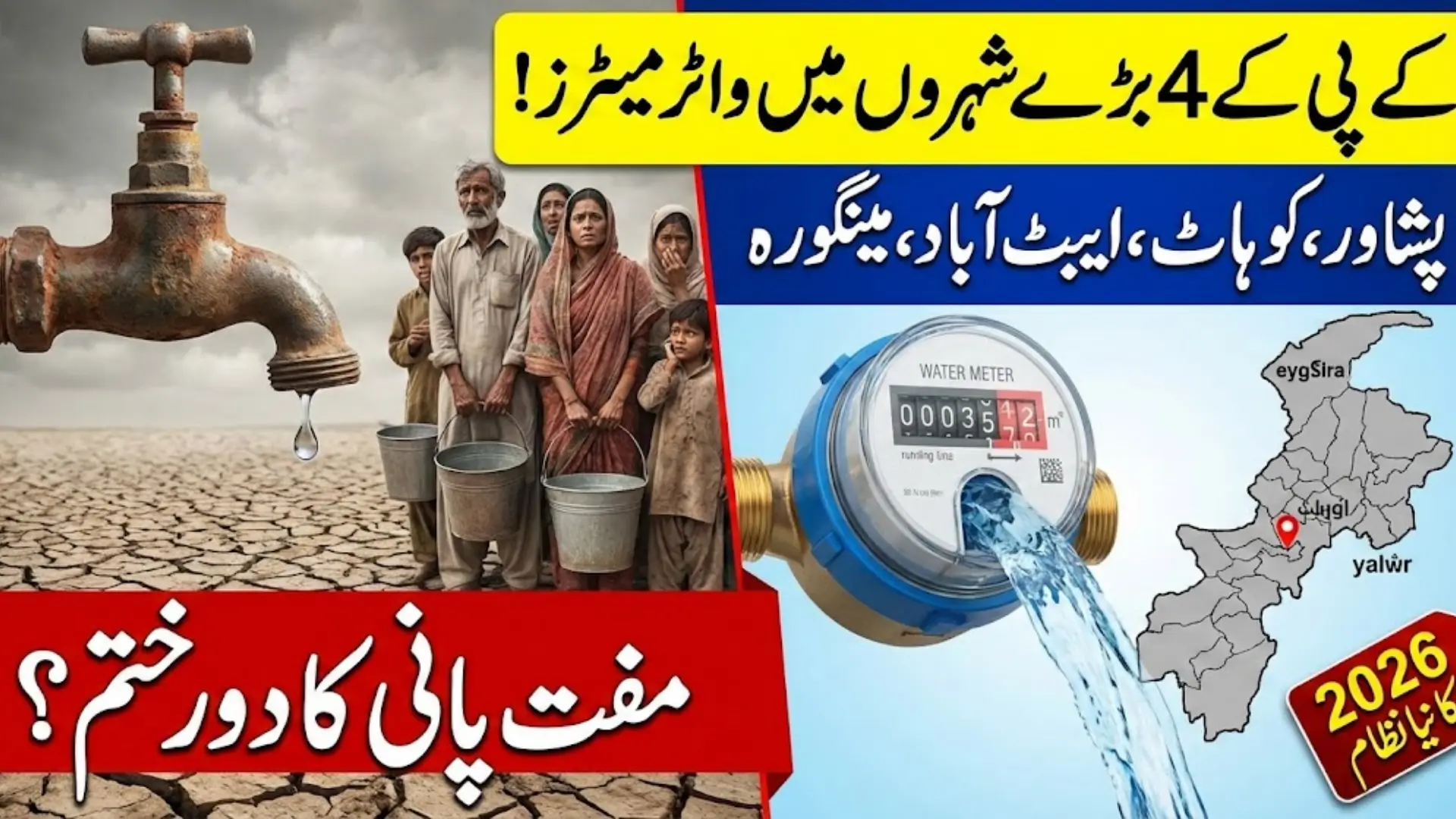
KP to Install Water Meters in Four Major Cities
KP to Install Water Meters in Four Major Cities Water scarcity is no longer a distant threat for Khyber Pakhtunkhwa; it is a reality that residents of major cities experience every summer. In recent years, many urban areas have seen taps run dry for hours, while tube wells struggle to meet rising demand. Rapid population growth, climate change, and unregulated groundwater extraction have combined to create serious pressure on already fragile water systems.
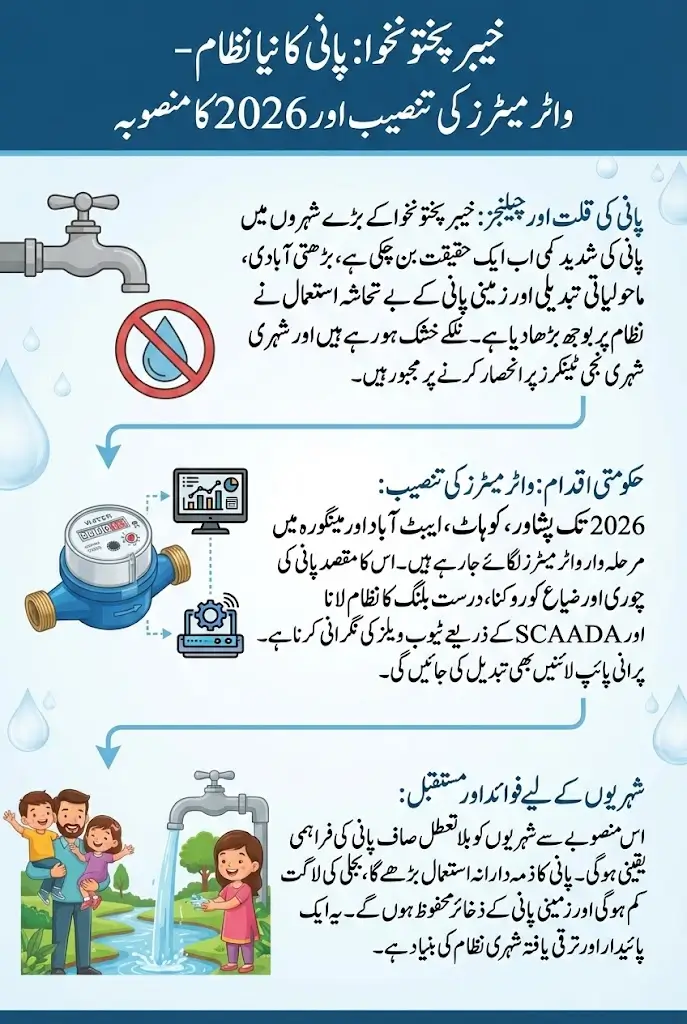
Recognizing the urgency of the situation, the Local Government, Elections and Rural Development Department has decided to take concrete action. Instead of temporary solutions, the government is focusing on long-term reforms that address the root causes of water loss and mismanagement. Installing water flow meters is one such step, aimed at protecting water resources for future generations while improving current service delivery.
You Can Also Read: Punjab Livestock Department Completes E-Balloting
Khyber Pakhtunkhwa Cities Improvement Project Explained
The water meter installation is being carried out under the Khyber Pakhtunkhwa Cities Improvement Project, a comprehensive initiative designed to modernize urban services. The project focuses on strengthening infrastructure, introducing modern technology, and improving operational efficiency in major cities.
Rather than increasing water extraction, the project emphasizes better monitoring and smarter management. Officials involved in the project say the goal is to reduce waste, improve accountability, and ensure that existing water resources are used responsibly. This approach reflects a shift from crisis management to planned urban development.
You Can Also Read: Ramadan Relief Package Update: Proposal
Cities Selected for Water Meter Installation
The project initially covers Peshawar, Kohat, Abbottabad, and Mingora, four cities that are facing intense water stress. These cities have expanded rapidly, with new housing schemes and commercial areas placing heavy demand on limited water supplies.
In many localities, water demand has already exceeded supply, forcing residents to depend on private borewells and water tankers. Authorities believe that by starting reforms in these high-pressure cities, they can prevent a complete breakdown of urban water systems and create a model for other areas of the province.
Purpose of Installing Water Flow Meters
Water flow meters are essential tools for understanding how water moves through a city. At present, water utilities often rely on estimates rather than accurate data, making it difficult to control losses or plan improvements.
The installation of meters will help authorities:
- Measure actual water consumption
- Detect unusual or excessive usage
- Identify leak-prone areas
- Encourage responsible water use
By making water usage visible and measurable, the government hopes to reduce wastage and improve fairness in distribution.
You Can Also Read: Byd Atto 2 Price In Pakistan Full Specs
Step-by-Step Plan for Water Meter Implementation
The implementation process will be gradual to minimize disruption for residents. Authorities will first assess existing infrastructure and prioritize areas where water losses are highest.
The step-by-step approach includes:
- Detailed surveys of water supply networks
- Phased installation of flow meters
- System testing and calibration
- Integration with monitoring platforms
- Public awareness campaigns on water conservation
This structured rollout ensures that technical improvements go hand in hand with public understanding.
You Can Also Read: BISP 13500 Update Why Beneficiaries
Introduction of SCADA Systems on Tube Wells
Another key component of the project is the installation of SCADA systems on tube wells. SCADA allows real-time monitoring of water extraction and system performance from a central control room.
With SCADA, authorities can monitor:
- Groundwater extraction levels
- Energy consumption patterns
- Operational efficiency of tube wells
This technology helps prevent over-pumping, reduces electricity costs, and protects underground water reserves from unchecked depletion.
Replacement of Old and Rusted Water Pipelines
Aging and rusted pipelines are a hidden but serious problem in KP cities. Over time, these pipelines develop cracks and leaks, causing large volumes of treated water to be lost before reaching consumers. In some cases, rusted pipes also affect water quality.
Under the improvement project, large-scale pipeline replacement will be carried out. New pipelines will reduce leakages, improve pressure, and ensure cleaner water supply, especially during high-demand summer months.
Tackling Non-Revenue Water Losses
Non-revenue water refers to water that is produced but never billed due to leakages, illegal connections, or faulty infrastructure. This has been a major financial and operational challenge for water utilities.
To address this issue, the project focuses on:
- Accurate flow measurement
- Leak detection through monitoring
- Infrastructure rehabilitation
Reducing non-revenue water will allow utilities to serve more people without extracting additional groundwater.
You Can Also Read: PTA Issues Clarification Against Massive Reduction
Groundwater Stress and Declining Aquifer Levels
Data collected by Water and Sanitation Services Companies shows a steady decline in groundwater levels across all four cities. Aquifers are being depleted faster than they can naturally recharge, mainly due to excessive and unregulated extraction.
Officials have warned that if this trend continues, groundwater levels could fall below sustainable limits. Once that happens, recovery becomes extremely difficult, making water shortages a permanent feature of urban life.
Impact of Private Borewells and Water Tankers
The growing reliance on private borewells and water tankers highlights the failure of unmanaged systems. While these options provide temporary relief, they accelerate groundwater depletion and increase inequality.
Unregulated borewells allow continuous extraction without oversight, drying up nearby tube wells and raising water costs. Poorer communities often suffer the most, paying more for less water.
Energy and Operational Cost Reduction Goals
Water extraction and distribution consume large amounts of electricity. Inefficient pumping and lack of monitoring have pushed operational costs higher for water utilities.
Through better control and monitoring, the project aims to:
- Reduce electricity consumption
- Lower maintenance expenses
- Improve financial sustainability
These savings can help utilities invest in further service improvements.
You Can Also Read: Punjab Rozgar Scheme 2026 For Interest-Free Loan
Expected Benefits for Urban Residents
For residents, the benefits of this project will be gradual but meaningful. Improved infrastructure and monitoring will lead to more stable water supply and fewer emergencies during peak demand periods.
Key expected benefits include:
- Improved reliability of water supply
- Reduced dependence on water tankers
- Better water quality
Long-Term Water Conservation Strategy for KP
This initiative reflects a broader shift toward water conservation in Khyber Pakhtunkhwa. Instead of extracting more water, the focus is on managing existing resources wisely.
By combining meters, SCADA systems, and infrastructure upgrades, the province is moving toward a sustainable urban water management model.
What This Project Means for the Future of KP Cities
If implemented effectively, this project can reshape how KP cities manage water. It signals a move toward accountability, sustainability, and long-term planning.
For growing urban centers, these reforms are not optional. They are essential for ensuring that future generations have access to clean and reliable water.
You Can Also Read: Basant Festival 2026 Date Announced
Overview of KP Water Improvement Measures
| City | Major Issue Identified | Key Intervention Planned |
|---|---|---|
| Peshawar | Excessive groundwater extraction | Water meters and SCADA systems |
| Kohat | Pipeline leakage | Infrastructure replacement |
| Abbottabad | Seasonal water shortages | Monitoring and loss reduction |
| Mingora | Rapid urban expansion | Network upgrades and control |