
Punjab Livestock Department Completes E-Balloting
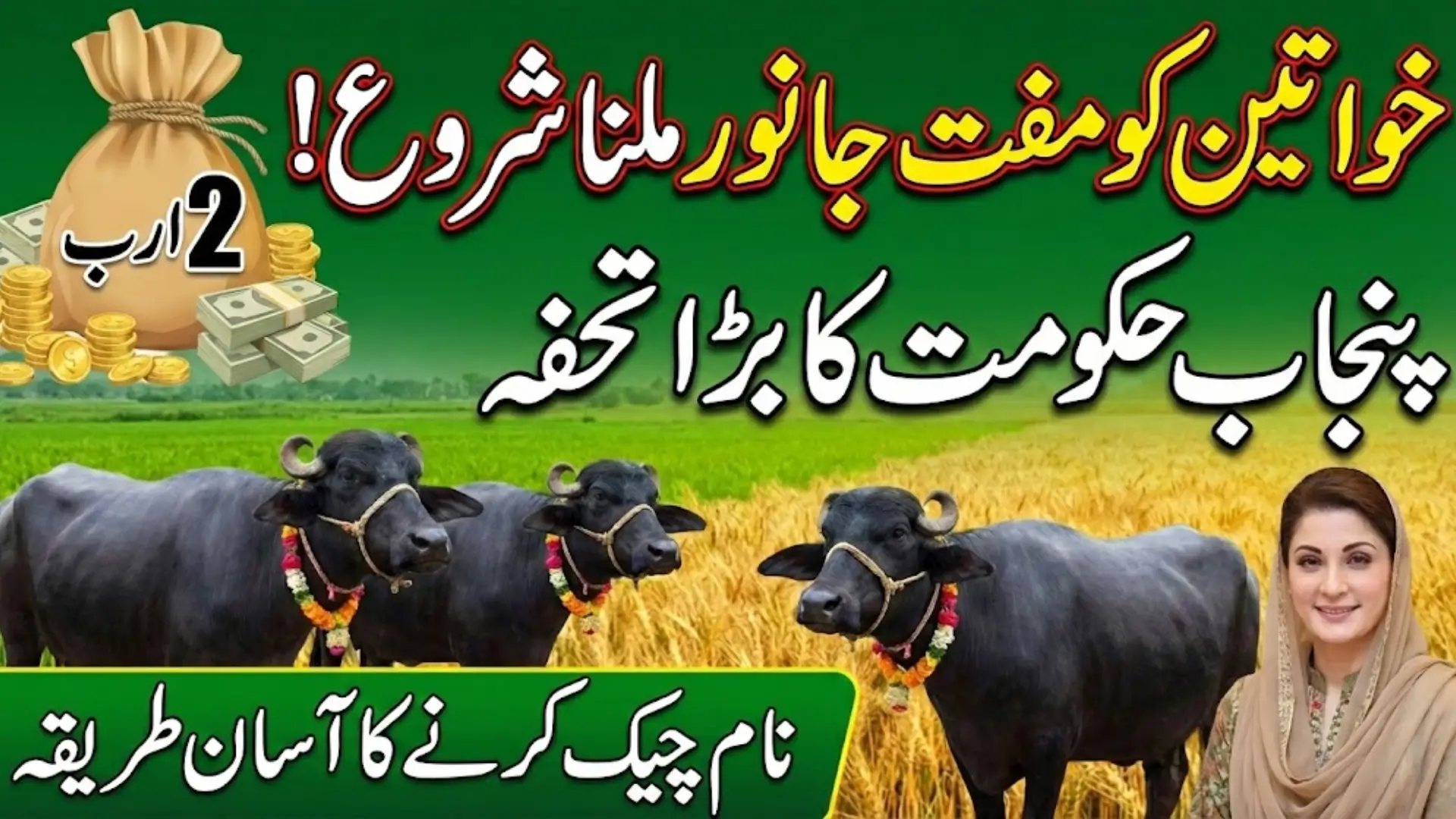
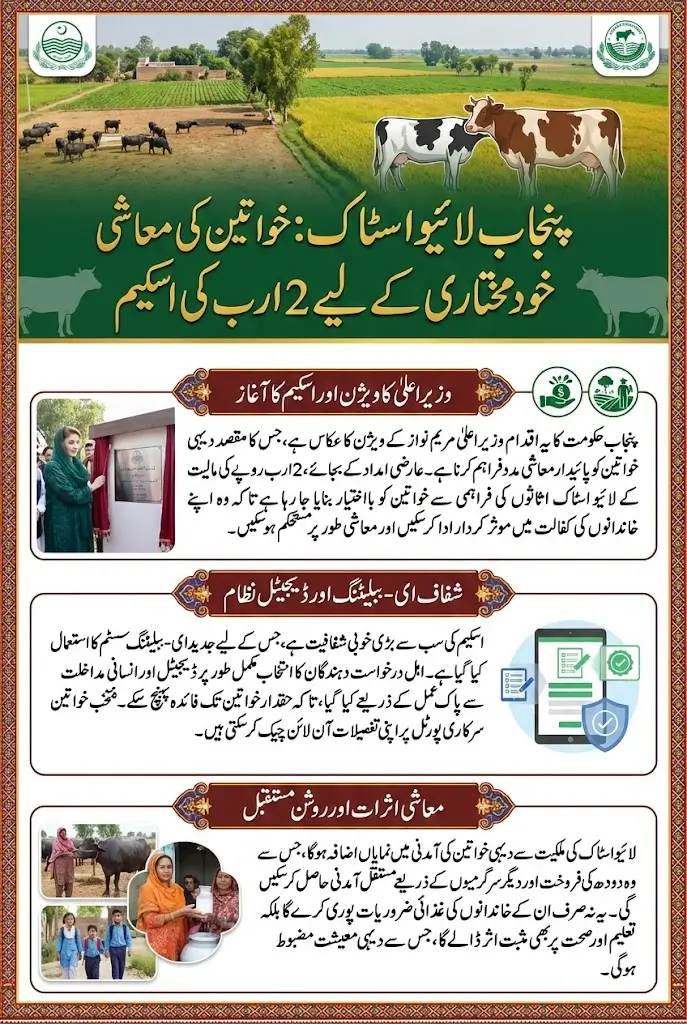
Punjab Livestock Department Completes E-Balloting Punjab government has launched a major welfare initiative aimed at improving the economic condition of rural women in South Punjab by providing livestock assets worth Rs 2 billion. This programme has been designed to support women who belong to low-income households and depend largely on agriculture and livestock for survival. Instead of temporary financial assistance, the government has chosen a long-term and sustainable approach by distributing productive assets.
From my observation, schemes like this resonate deeply in rural Punjab because livestock is already part of daily life. Women understand how to care for animals, how to benefit from milk production, and how to turn small resources into steady income. This makes the programme practical rather than theoretical.
The initiative also reflects a shift in public welfare thinking, where empowerment is preferred over relief. By targeting women directly, the government has acknowledged their central role in sustaining rural households.
You Can Also Read: Ramadan Relief Package Update: Proposal
Vision of the Chief Minister Behind the Programme
This livestock distribution programme was launched on the direct instructions of the Chief Minister of Punjab, who has consistently focused on inclusive development and poverty reduction. The aim was not only to support women financially but also to provide them with dignity, independence, and decision-making power within their families.
The Chief Minister’s vision was based on ground realities of South Punjab, where employment opportunities are limited and women often contribute silently to household income. Livestock ownership changes this dynamic by giving women a visible and recognized economic role.
Key objectives behind the Chief Minister’s vision include:
- Strengthening women-led income sources
- Reducing dependency on short-term aid
- Promoting self-employment in rural areas
- Improving overall household stability
You Can Also Read: Byd Atto 2 Price In Pakistan Full Specs
Role of the Punjab Livestock Department
The Punjab Livestock Department was responsible for executing the programme from start to finish. Its role included registration, verification of applicants, organization of the e-balloting process, and final announcement of successful beneficiaries. The department adopted a systematic and technology-driven approach to ensure transparency.
Officials worked closely with local administrations to ensure that only eligible and deserving women were included. From what was visible, the department focused strongly on reducing manual interference and increasing public trust through digital systems.
The department ensured:
- Clear eligibility criteria
- Accurate data verification
- Transparent digital selection
- Public access to results
You Can Also Read: BISP 13500 Update Why Beneficiaries
Rs 2 Billion Investment for Rural Empowerment
The allocation of Rs 2 billion for this programme highlights the scale and seriousness of the initiative. Such a large investment demonstrates that women empowerment is not being treated as a symbolic goal but as a practical development priority.
This financial commitment covers the provision of livestock assets and the administrative systems required to manage such a large programme. The government’s focus was on making sure that resources were used efficiently and reached the intended beneficiaries.
Below is a snapshot of the programme’s key details:
| Aspect | Details |
|---|---|
| Total Investment | Rs 2 Billion |
| Implementing Department | Punjab Livestock Department |
| Target Beneficiaries | Rural Women |
| Focus Area | South Punjab |
| Selection Method | Transparent E-Balloting |
Focus on Rural Women of South Punjab
South Punjab has long faced development challenges, including limited job opportunities, low income levels, and lack of access to financial resources. Rural women in this region often work alongside men in agriculture but rarely receive direct support.
This programme specifically targets women from rural backgrounds, recognizing their contribution and potential. By giving them livestock assets, the government has enabled them to generate income without leaving their homes or compromising cultural norms.
The beneficiaries mainly include women who:
- Belong to low-income rural families
- Have basic experience with livestock
- Lack access to formal employment
- Support household expenses through informal work
You Can Also Read: PTA Issues Clarification Against Massive Reduction
Transparent E-Balloting System Explained
A key strength of this initiative is the use of a transparent e-balloting system for beneficiary selection. Instead of traditional manual methods, a digital draw was conducted to ensure fairness and equal opportunity for all applicants.
This system helped eliminate favoritism, political influence, and human bias. From a public trust perspective, this is one of the most important aspects of the programme, as people can clearly see how selections were made.
Benefits of the e-balloting system include:
- Equal chance for all eligible applicants
- No manual interference
- Increased transparency
- Reduced complaints and disputes
You Can Also Read: Punjab Rozgar Scheme 2026 For Interest-Free Loan
Inauguration Under Provincial Leadership
The e-balloting process was formally inaugurated under the chairmanship of Provincial Minister for Livestock Punjab, Syed Ashiq Hussain Kirmani. His leadership during the process reinforced the government’s commitment to transparency and accountability.
The successful completion of e-balloting under provincial supervision sent a strong signal that the programme was being monitored at the highest level. This helped build confidence among applicants and the general public.
The inauguration also highlighted the use of digital governance tools in welfare programmes, which is becoming increasingly important in modern public administration.
Ensuring Fair Selection of Beneficiaries
To ensure fairness, the department applied strict eligibility checks before including applicants in the e-balloting draw. Only verified and eligible candidates were allowed to participate, reducing the risk of misuse.
This careful approach protected the rights of deserving women and strengthened the credibility of the programme. From a journalistic point of view, this is how large-scale welfare initiatives should be implemented.
Fairness was ensured through:
- CNIC-based verification
- Data cross-checking
- Digital record keeping
- Official oversight
You Can Also Read: Basant Festival 2026 Date Announced
How Selected Women Can Verify Their Details
Women who were selected through e-balloting can check their names and complete details on the official portal provided by the government. This digital facility allows beneficiaries to confirm their status without relying on agents or visiting offices.
The portal is designed to be simple so that even users with basic digital knowledge can access their information. This step further enhances transparency after the selection process.
The verification system helps:
- Save time and travel costs
- Reduce misinformation
- Provide direct access to official data
You Can Also Read: Imam Masjid Registration Phase 2 Begins in Punjab
Economic Impact on Households
Ownership of livestock can significantly improve household income in rural areas. Women can earn through milk sales, breeding, and related activities, which provides a steady and reliable source of income.
This income often goes directly toward household needs such as food, education, and healthcare. Over time, families become more financially secure and less dependent on external assistance.
Positive household impacts include:
- Improved nutrition
- Regular income flow
- Better education opportunities
- Increased financial independence
Long-Term Benefits for Rural Communities
Beyond individual families, this programme contributes to long-term rural development. As more women engage in productive economic activity, local markets become stronger and community resilience improves.
The scheme also encourages skill enhancement and responsible asset management, which are essential for sustainable growth in rural Punjab.
Community-level benefits include:
- Stronger rural economies
- Increased women participation
- Sustainable livelihood creation
You Can Also Read: BISP Biometric Issue Resolved: Facial Recognition
Government’s Commitment to Women Empowerment
This initiative reflects the Punjab government’s broader policy direction toward women empowerment through practical support. By focusing on assets instead of temporary aid, the government has taken a meaningful step toward long-lasting change.
Such programmes show that women empowerment is being integrated into development planning, especially for underserved regions like South Punjab.
Conclusion
The completion of the e-balloting process for the Rs 2 billion livestock scheme marks an important milestone in Punjab’s social welfare efforts. It demonstrates that transparency, technology, and inclusive policy can work together effectively.
From what has been seen on the ground, this initiative has the potential to transform lives, strengthen rural economies, and elevate the role of women in South Punjab. If implemented consistently, it can serve as a model for future development programmes across Pakistan.
You Can Also Read: Gold Price In Pakistan Per Tola Today